Net worth & personal profile
Woody HarrelsonNet Worth
A source-checked look at the $70 million estimate, his rare documented contract, gross points, cannabis filings, wife Laura Louie, three daughters and current 2026 work.
Source: Celebrity Net Worth estimate. Not an independently verified personal balance sheet.
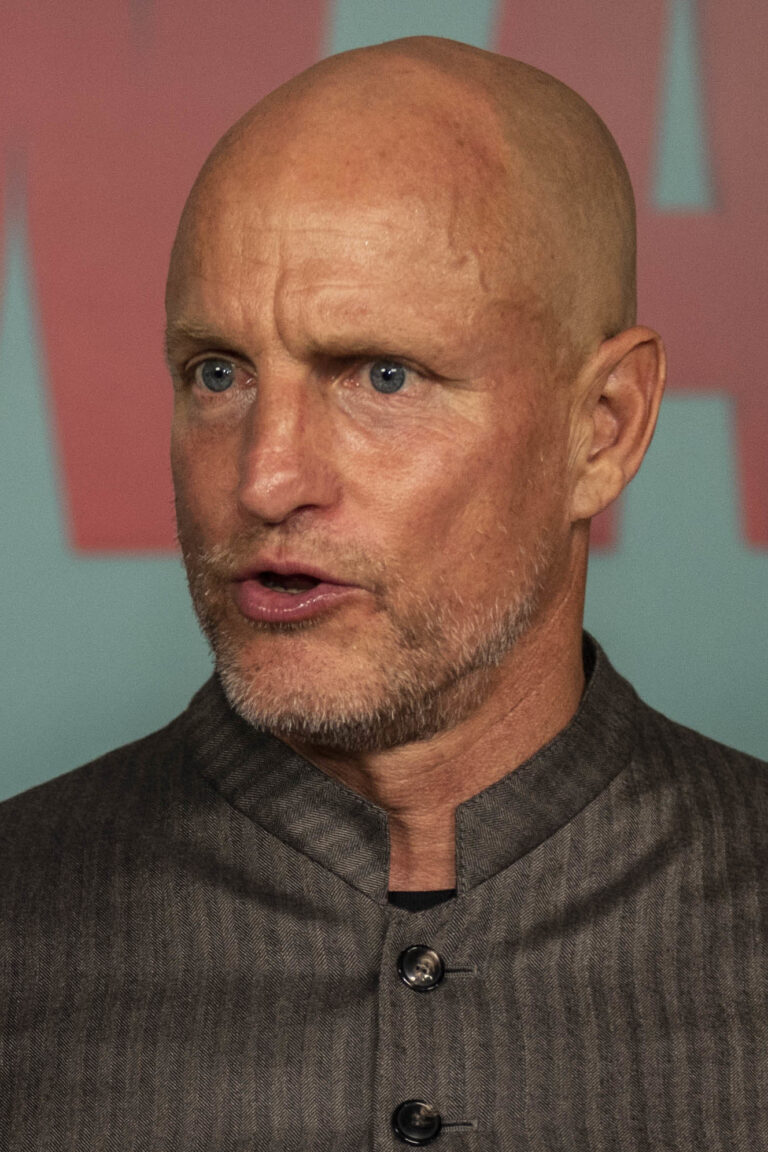
Source · Public domain — U.S. Navy · Displayed crop
The essentials
The $70 million headline is a current Celebrity Net Worth estimate. The publisher provides no asset schedule or valuation model and its only listed career fee lacks a named underlying source. [2]
AFI records a $1.25 million pay-or-play agreement for Benny & Joon, but Harrelson left the film and the surviving record does not show that he collected the guarantee. [3]
Paramount later acknowledged that Harrelson received gross participation on Indecent Proposal. The deal type is confirmed; his percentage and payout are not. [4]
Woody Harrelson has worked steadily for four decades, but public records disclose surprisingly little about his personal finances. The strongest evidence is a collection of specific contract, court, regulatory and securities records. None is a complete balance sheet.
This profile keeps the current $70 million publisher estimate visible while preserving the harder findings from the earlier investigation. A guarantee, film gross, company liquidity test or securities offering belongs to its own legal and accounting context; none can simply be added to personal wealth. Net Worth VIP — methodology
01 / The breakthrough
Cheers opened a film career with unusual longevity
Harrelson joined Cheers as bartender Woody Boyd in 1985 and remained through 1993. The Television Academy calls the role his breakthrough and records five supporting-actor nominations for the series, including his 1989 win. Its current database lists ten total Emmy nominations and one win. Television Academy — Woody Harrelson
He later moved between studio comedy, independent drama and franchises: White Men Can’t Jump, Natural Born Killers, The People vs. Larry Flynt, No Country for Old Men, Zombieland, The Hunger Games, Three Billboards Outside Ebbing, Missouri and True Detective. Awards and franchise longevity explain market value, but they do not disclose contract terms.
The public salary record is thin. Celebrity Net Worth lists $5.5 million for Money Train, but names no contract, filing or contemporary trade report beneath it. The figure is therefore a secondary claim, not a verified career ledger. Celebrity Net Worth — Woody Harrelson
02 / Personal life
Laura Louie, three daughters and a private family life
Harrelson met Laura Louie during the Cheers years, and they married in 2008. Current reporting from December 2025 still identifies Louie as his wife. The couple have three adult daughters: Deni, Zoe and Makani. E! News — Woody Harrelson and Laura Louie
Harrelson has described his wife and daughters as a stabilizing force in direct interviews. The family keeps a comparatively low public profile, so this page does not infer occupations, relationships, residences or finances for the daughters beyond what reliable sources publish. The Guardian — Woody Harrelson interview
His spouse’s assets and any family-held companies are not automatically his personal property. Without ownership records, trusts, debt and marital-property detail, a household description cannot support a combined net-worth calculation.
03 / The strongest money evidence
One guarantee, a lawsuit and confirmed gross points
AFI’s production history for Benny & Joon cites a June 1992 trade report: Harrelson reached a verbal agreement in March, then a written pay-or-play contract guaranteeing $1.25 million and top billing. He left on April 23 for Indecent Proposal. The guarantee is documented; receipt is not. AFI Catalog — Benny & Joon
The studio sued Harrelson and the rival production for more than $5 million. AFI preserves two different settlement accounts: one reported “upwards of $400,000” paid by the rival studio, while another estimated $400,000 to $500,000 without identifying the payer. Neither shows Harrelson personally paying damages. AFI Catalog — Indecent Proposal
The same AFI record contains the most consequential contract fact. In later litigation, Paramount argued that Indecent Proposal had earned $250 million worldwide but only $35.7 million in net profit, partly because gross participation had been paid to the producer, director, Harrelson and his co-stars. That confirms Harrelson had gross points; it does not disclose his percentage or total payout. AFI Catalog — Indecent Proposal
The evidence, with its limits
| Source / measure | Public figure | What it establishes |
|---|---|---|
| Celebrity Net Worth — Woody Harrelson | $70 million | Current publisher estimate; no audited balance sheet or disclosed model. |
| AFI Catalog — Benny & Joon | $1.25 million | 1992 pay-or-play guarantee and top billing; collection is not shown. |
| AFI Catalog — Indecent Proposal | >$5 million claimed | Studio lawsuit amount against multiple defendants, not a proven personal loss. |
| AFI Catalog — Indecent Proposal | $400,000–$500,000 reported | Conflicting settlement accounts; no evidence Harrelson was the payer. |
| AFI Catalog — Indecent Proposal | $250M worldwide / $35.7M net | Studio figures for Indecent Proposal in litigation, not Harrelson’s income. |
| Hawaii Department of Health — Simple Organic Living application | $5,000 fee | Non-refundable Hawaii application fee paid at company level. |
| SEC — 2016 Form D filing | $16,565,026 offering | Capital raised by a company where Harrelson was a director, not his money. |
04 / Companies and current work
Cannabis records, a former board seat and three 2026 projects
Harrelson’s Hawaii cannabis application is useful because it is an official record. Simple Organic Living paid a $5,000 non-refundable fee and had to demonstrate at least $1 million plus $100,000 per retail location under company control for 90 days. The company ranked ninth at 420 points and did not receive one of the three licenses. The threshold applies to the company, and ownership percentages are redacted. Hawaii Department of Health — Simple Organic Living application · Hawaii Department of Health — applicant ranking
California’s license register did not list Harrelson among the disclosed owners of the West Hollywood dispensary often described as his. That limits the public ownership claim, but it cannot rule out every below-threshold, contractual or indirect economic interest because state disclosure rules have boundaries. California Department of Cannabis Control — license search
A 2016 SEC Form D named Harrelson as a director of a Delaware technology company that reported a $16.565 million offering sold to 38 investors. The 2018 filing no longer named him. The filing proves a former board role; the offering was company capital and neither his investment nor his income. SEC — 2016 Form D filing · SEC — 2018 Form D filing
His screen work remains current. Cannes listed both Full Phil and Groundswell in its 2026 selection. Apple’s Brothers pairs Harrelson with Matthew McConaughey as fictionalized versions of themselves and lists Harrelson as both star and executive producer; the series premieres September 23, 2026. No fee or producer participation is public. Festival de Cannes — Woody Harrelson · Apple TV Press — Brothers
Financial record
The money timeline
Brothers premieres on Apple TVCareerNot disclosedDetails & source
Amount and context
Not disclosed · USD
Harrelson stars with Matthew McConaughey and is credited as an executive producer.
Open source for Brothers premieres on Apple TV ↗Hawaii application ranks ninthDeal$5,000Details & source
Amount and context
$5,000 · USD
Simple Organic Living cleared the application process but did not receive one of three licenses.
Open source for Hawaii application ranks ninth ↗Gross participation disclosedDealNot disclosedDetails & source
Amount and context
Not disclosed · USD
A studio defense confirmed Harrelson received gross participation on Indecent Proposal, without naming his rate or payout.
Open source for Gross participation disclosed ↗Benny & Joon pay-or-play agreementDeal$1.25MDetails & source
Amount and context
$1,250,000 · USD
AFI records a $1.25 million guarantee and top billing; payment is not established.
Open source for Benny & Joon pay-or-play agreement ↗Harrelson joins CheersCareerNot disclosedDetails & source
Amount and context
Not disclosed · USD
Woody Boyd became his breakthrough role and later earned him an Emmy.
Open source for Harrelson joins Cheers ↗Amounts describe different financial measures and retain their original currencies. They must not be added together as personal wealth. Our methodology.
Common questions
Questions, answered
What is Woody Harrelson’s net worth in 2026?
Celebrity Net Worth estimates $70 million. It is a publisher estimate, not an audited balance sheet; no complete public record of his current assets, debts, taxes or private-company interests was found.
What is Woody Harrelson’s only well-documented acting contract amount?
AFI records a $1.25 million pay-or-play guarantee for Benny & Joon in 1992. Harrelson left the film, and the surviving evidence does not show whether the guarantee was paid.
Did Woody Harrelson receive gross points on Indecent Proposal?
Yes. A studio statement preserved by AFI confirms gross participation was paid to Harrelson and others. His percentage and total payout were not disclosed.
Who is Woody Harrelson’s wife and does he have children?
He is married to Laura Louie. They have three adult daughters: Deni, Zoe and Makani.
What is Woody Harrelson doing now?
He appeared in the 2026 Cannes selections Full Phil and Groundswell. Apple’s comedy series Brothers, in which he stars and serves as an executive producer, premieres September 23, 2026.
Follow the evidenceSources & reading15 links
- Net Worth VIP — methodology ↗
Explains how estimates, contract guarantees, company funds and personal wealth are separated.
- Celebrity Net Worth — Woody Harrelson ↗
Current publisher page estimates $70 million and lists a $5.5 million Money Train fee without a named underlying source.
- AFI Catalog — Benny & Joon ↗
Cites a June 1992 trade report on Harrelson’s $1.25 million pay-or-play agreement, top billing and departure.
- AFI Catalog — Indecent Proposal ↗
Records the lawsuit, conflicting settlement reports, worldwide gross and studio statement that Harrelson received gross participation.
- Hawaii Department of Health — Simple Organic Living application ↗
Official redacted application records the company, $5,000 non-refundable fee and statutory financial requirements.
- Hawaii Department of Health — applicant ranking ↗
Official ranking places Simple Organic Living ninth at 420 points; only three licenses were awarded.
- SEC — 2016 Form D filing ↗
Names Harrelson as a director and reports a $16,565,026 offering sold to 38 investors.
- SEC — 2018 Form D filing ↗
Later filing lists different related persons and no longer names Harrelson.
- California Department of Cannabis Control — license search ↗
Official license register used to test published ownership claims; disclosure thresholds limit what absence can prove.
- Television Academy — Woody Harrelson ↗
Official record confirms Midland birthplace, Cheers breakthrough, one Emmy win and ten nominations through 2024.
- Apple TV Press — Brothers ↗
Official page sets the September 23, 2026 premiere and lists Harrelson as star and executive producer.
- Festival de Cannes — Woody Harrelson ↗
Official festival record lists Full Phil and Groundswell in the 2026 selection.
- E! News — Woody Harrelson and Laura Louie ↗
December 2025 reporting confirms his current wife and daughters Deni, Zoe and Makani.
- The Guardian — Woody Harrelson interview ↗
Direct interview in which Harrelson discusses Laura and their three daughters.
- Wikimedia Commons — Woody Harrelson 2019 crop ↗
U.S. Navy photograph by Justin R. Pacheco, released into the public domain.