Net worth & personal profile
David SchwimmerNet Worth
The $120M estimate tested against the Friends salary ladder, unsupported 2% claim, reported residuals, reunion fee, theatre work and current family life.
David Schwimmer’s net worth is not independently established. Celebrity Net Worth publishes $120 million. The strongest public evidence concerns gross Friends compensation shared by all six leads: $750,000 per episode for seasons seven and eight and $1 million per episode for the final two years. Backend participation exists, but the reviewed contemporaneous report gave no percentage, and no statement shows Schwimmer’s lifetime distributions, taxes, spending, assets or debts. Salary and residual headlines therefore cannot verify a current personal balance sheet.

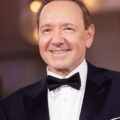
Source · CC BY-SA 2.0 · editorial crop · Displayed crop
The essentials
Celebrity Net Worth publishes $120 million, but no reviewed source supplies Schwimmer’s complete assets, liabilities, taxes and contract statements. [1]
The Television Academy records $750,000 per episode for seasons seven and eight and $1 million for the final two years; these are gross fee rates, not current wealth. [4]
A 2000 trade report described backend participation as relatively small and printed no percentage, leaving the widely repeated 2% figure unverified. [3]
The estimate · Friends salary · Residuals · Other work · Personal life · Evidence
David Schwimmer’s profile has better salary evidence than most actor pages because the Friends cast negotiated publicly as a group. That strength also creates a limit: the best numbers are shared fee rates, while his personal backend statements, taxes, assets and debts remain private.
This review follows the Net Worth VIP methodology. It keeps a publisher’s wealth estimate separate from gross episode fees, reported reunion compensation, studio revenue, residual claims and current personal wealth.
01 / The estimate
The $120M estimate cannot be reproduced from a public balance sheet
Celebrity Net Worth publishes $120 million as of May 1, 2026. Its calculation combines a reconstructed salary history with assumptions about backend profit participation, property and long-term royalties.
The page now rejects the familiar $10 million to $20 million annual royalty claim and instead models $60 million to $70 million of total royalties since 2000. That is still an estimate: no participation statement, payment schedule or Schwimmer-specific tax record is published.
The structured net-worth field remains blank. A plausible nine-figure estimate is not the same as a dated inventory of cash, investments, real estate, company interests and liabilities.
02 / Friends salary
The episode rates are documented; lifetime take-home pay is not
A 1996 Variety report places the first two seasons around $30,000 to $35,000 per episode and records a negotiated ladder through later seasons. Contemporary reports differ from some modern tables that publish $22,500 and $40,000 without reconciling the contract periods.
The Television Academy’s 30th-anniversary oral history states that the six leads received $750,000 per episode for seasons seven and eight and $1 million per episode for the final two years. The same account credits Schwimmer with pushing equal group pay.
These are gross rates before agents, managers, legal fees and tax. Episode counts can estimate production-period salary, but they cannot reveal refunds, deferrals, bonuses, deductions, later investments or what remains today.
03 / Residuals and backend
Participation is real; the famous 2% and a steady $20M year remain unproved
Variety reported in 2000 that the cast accepted more participation and backend advances, describing the existing participation as relatively small. The article did not publish an individual percentage or a contract definition of profits.
Celebrity Net Worth now asserts 2% of net profits and models $60 million to $70 million of cumulative royalties. Other sites repeatedly turn a supposed 2% share of studio revenue into $20 million every year. Neither approach is supported by a reviewed contract or participation statement.
In 2026, coverage of a Lisa Kudrow interview revived a $20 million annual residual figure. It remains a castmate’s reported discussion, not Schwimmer’s account record, and does not establish a fixed annual payment, calculation base or current net distribution.
04 / Work beyond reruns
Directing, production and theatre add careers—not public dollar values
Schwimmer directed ten Friends episodes and later feature films, but no reviewed source discloses his directing fees. Film budgets and box office belong to productions and cannot be converted into personal compensation.
He was reported to receive at least $2.5 million for Friends: The Reunion, based on unnamed sources close to the production. The special also brought an Emmy nomination to Schwimmer as an executive producer; no backend or producer fee is public.
Lookingglass Theatre lists him as a 1988 co-founder, ensemble member and 2024 executive committee member. Nonprofit filings describe the organization, but a founding credit does not establish equity, dividends or a present personal asset value.
05 / Current life and work
Parenting and selective projects define the current public picture
Disney released Goosebumps: The Vanishing in January 2025 with Schwimmer as Anthony, a divorced father at the center of the mystery. His fee, episode guarantee and residual terms were not disclosed.
AARP’s 2025 interview describes him parenting his daughter Cleo with ex-wife Zoë Buckman. No reliable reviewed source confirms a current romantic partner, so the profile does not convert sightings or speculation into a relationship.
The Television Academy lists three Primetime Emmy nominations across Friends, The People v. O.J. Simpson and Friends: The Reunion. Awards and continued work demonstrate demand; they do not disclose current earnings or wealth.
The evidence, with its limits
| Figure or fact | What it establishes | What it does not establish |
|---|---|---|
| $120M | Published outside estimate | Audited personal net worth |
| $30K–$35K | Contemporaneous report for early Friends seasons | Exact take-home pay |
| $750K per episode | Seasons seven and eight fee rate | Net income after costs and tax |
| $1M per episode | Final two years fee rate | Present assets |
| About $40M | Reported two-year deal value including salary and advances | Cash retained today |
| Backend participation | Documented contract feature | A verified 2% rate |
| $20M per year | Reported residual discussion | Schwimmer’s fixed annual net payment |
| At least $2.5M | Reported reunion fee per cast member | Studio-confirmed contract or after-tax receipt |
| 3 Primetime Emmy nominations | Official awards record | Salary or asset value |
| Lookingglass co-founder | Documented artistic role | Private equity or dividends |
Financial record
The money timeline
Goosebumps: The Vanishing premieresCareerNot disclosedDetails & source
Amount and context
Not disclosed · USD
Schwimmer leads the Disney+ and Hulu anthology chapter as Anthony Brewer.
Open source for Goosebumps: The Vanishing premieres ↗Final Friends years reach $1 million per episodeDeal$1MDetails & source
Amount and context
$1,000,000 · USD
The Television Academy records the landmark equal rate for the six leads.
Open source for Final Friends years reach $1 million per episode ↗Seasons seven and eight reach $750,000 per episodeDeal$750,000Details & source
Amount and context
$750,000 · USD
The deal also expands participation, without publishing an individual percentage.
Open source for Seasons seven and eight reach $750,000 per episode ↗Cast signs a new equal-pay ladderDeal$75,000Details & source
Amount and context
$75,000 · USD
The collective agreement begins a documented rise in equal episode fees.
Open source for Cast signs a new equal-pay ladder ↗Friends premieres with Schwimmer as Ross GellerCareerNot disclosedDetails & source
Amount and context
Not disclosed · USD
The role becomes the center of his television career and later group negotiations.
Open source for Friends premieres with Schwimmer as Ross Geller ↗Amounts describe different financial measures and retain their original currencies. They must not be added together as personal wealth. Our methodology.
Common questions
Questions, answered
What is David Schwimmer’s net worth?
It is not independently established. Celebrity Net Worth publishes $120 million, but no reviewed source provides his complete assets, liabilities, taxes and Friends participation statements.
How much did David Schwimmer earn per episode of Friends?
The Television Academy records $750,000 per episode for seasons seven and eight and $1 million per episode for the final two years. Earlier trade reporting gives a lower season-by-season ladder. These are gross fee rates.
Does David Schwimmer receive 2% of Friends revenue?
The reviewed contemporaneous report confirms participation but prints no percentage. The widely repeated 2% figure is therefore not treated as verified, and revenue is different from contract-defined profit.
Does David Schwimmer still make $20 million every year from Friends?
That is not established. A 2026 report discussed a castmate’s residual comment, but no Schwimmer payment statement shows a fixed annual amount, calculation base, deductions or net receipt.
Is David Schwimmer married or dating anyone?
He is no longer married to artist Zoë Buckman, with whom he has daughter Cleo. No current partner was confirmed in the reliable sources reviewed through September 2026.
Follow the evidenceSources & reading16 links
- Celebrity Net Worth — David Schwimmer ↗
Publishes a $120 million estimate updated May 1, 2026; its salary and royalty model is not a personal balance sheet or contract disclosure.
- Variety — Friends cast re-pact ↗
Contemporaneous trade report gives the early salary range and contracted season-by-season ladder for the six-person cast.
- Variety — Friends extends ↗
Contemporaneous report describes $750,000 per episode for seasons seven and eight, backend advances and participation only qualitatively.
- Television Academy — Friends at 30 oral history ↗
Records $750,000 per episode for seasons seven and eight, $1 million for the final two years and Schwimmer’s role in equal-pay negotiations.
- Television Academy — David Schwimmer ↗
Official record lists three Primetime Emmy nominations: Friends, The People v. O.J. Simpson and Friends: The Reunion as executive producer.
- The Walt Disney Company — Goosebumps: The Vanishing ↗
Official interview confirms Schwimmer’s lead role as Anthony in the Disney+ and Hulu series released January 10, 2025.
- Lookingglass Theatre — David Schwimmer ↗
Official biography identifies him as a 1988 co-founder, ensemble member and 2024 executive committee member; it lists his education and current work.
- ProPublica Nonprofit Explorer — Lookingglass ↗
Public charity filings allow officer compensation to be checked; they do not establish Schwimmer’s personal wealth.
- Variety — Friends reunion ↗
Reported at least $2.5 million for each cast member, attributed to sources close to the situation rather than a disclosed contract.
- AARP — David Schwimmer interview ↗
Direct 2025 interview discusses parenting his daughter Cleo with ex-wife Zoë Buckman and his Goosebumps role.
- E! News — Friends residuals discussion ↗
Secondary coverage of a 2026 Lisa Kudrow interview discusses a $20 million annual residual figure; it does not disclose Schwimmer’s statements or payment records.
- Wikimedia Commons — David Schwimmer 2011 ↗
Single-person Deauville portrait by Philippe Berdalle, licensed CC BY-SA 2.0.
- Net Worth VIP — Lisa Kudrow ↗
Related Friends cast profile examining salary and residual claims.
- Net Worth VIP — Matt LeBlanc ↗
Related Friends cast profile separating contract reporting from personal wealth.
- Net Worth VIP — Adam Sandler ↗
Related actor-producer profile examining disclosed deals and private wealth.
- Net Worth VIP — methodology ↗
Explains why gross salary, backend claims, company revenue and personal net worth remain separate.