Net worth & personal profile
Matt LeBlancNet Worth
The $85M estimate tested against the real Friends salary ladder, backend advances, residual folklore, Top Gear disclosure limits, daughter Marina and CBS’s Flint development.
Matt LeBlanc’s net worth is not independently established. Celebrity Net Worth publishes $85 million, while contemporaneous trade reporting supports roughly $89 million in gross Friends salary across ten seasons and at least $2.5 million for the reunion. Those are pre-tax career receipts, not a current balance sheet. The cast’s exact syndication and streaming participation remains undisclosed, so the most repeated annual-residual claims cannot close the gap.

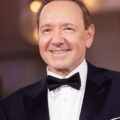
Source · CC BY 2.0 · Displayed crop
The essentials
Celebrity Net Worth publishes $85 million, but supplies no dated asset-and-liability schedule. Its own residual analysis models roughly $2.5–3 million annually while the wider claim says $20 million, showing why neither should be treated as a verified contract figure. [1]
Contemporaneous Variety reports support roughly $89 million in gross Friends salary over ten seasons. The figure precedes taxes and professional fees and does not measure what remains today. [2]
The seasons seven and eight agreement was reported at about $40 million per cast member over two years, counting salary and backend advances. An advance against participation is not an extra recurring annual payment. [3]
The estimate · Friends salary · Residuals · Later work · Personal life · Evidence
Matt LeBlanc’s finances are unusually well documented for one part of his career and unusually opaque everywhere else. Trade papers recorded the Friends salary negotiations in detail, but no public filing supplies his current assets, liabilities, tax position or exact profit-participation rate.
This review preserves the useful salary reconstruction while separating studio licence revenue, gross acting pay, backend advances, residuals and net worth. Net Worth VIP — methodology
01 / The outside estimate
$85M is published; the evidence cannot reproduce it
Celebrity Net Worth currently publishes $85 million. It does not provide a dated personal balance sheet, property schedule, investment account, debt total or tax calculation that another researcher could reproduce. The structured main value therefore remains blank.
The estimate is especially difficult to reconcile with the popular claim that every Friends cast member receives about $20 million every year from reruns. More than two decades at that rate would imply hundreds of millions in gross receipts before considering salary and other work.
The same publisher separately models the residual stream nearer $2.5 million to $3 million annually. Neither number comes from LeBlanc’s contract or a studio payment statement. The sevenfold gap is evidence of uncertainty, not a defensible range.
02 / The Friends salary ladder
Roughly $89M in gross salary is traceable — and still is not net worth
Variety’s December 1996 report says the six actors had earned $30,000 to $35,000 per episode for the first two seasons, not the often-repeated $22,500 and $40,000 sequence. The collective deal then set $75,000 for season three, $85,000 for season four and $100,000 for season five.
Season six was contracted at $120,000 per episode and reported as paid at $125,000. Seasons seven and eight rose to $750,000, while seasons nine and ten reached roughly $1 million per episode. Applying those reported rates to the episode counts produces about $89 million in gross Friends salary.
That reconstruction spans ten years and precedes federal and state tax, agents, managers, lawyers, living costs and investment outcomes. It establishes career earnings of a particular type and period; it does not show LeBlanc’s current net assets.
03 / Backend and residual folklore
The participation is real; the famous 2% and $20M are not contract disclosures
The seasons seven and eight deal was reported at about $40 million for each actor over two years, counting $36 million of salary and roughly $4 million in backend advances. Variety described the syndication percentage as relatively small and did not publish its rate.
The familiar 2% and $20 million annual claim dates to a 2015 newspaper story later traced to a Warner Bros. studio-tour guide. In 2026, Lisa Kudrow was asked about a £15 million version and answered with a joke; she did not disclose a percentage or payment statement.
Time Warner’s SEC filing confirms that exclusive Friends streaming rights were licensed, while the Netflix and HBO Max trade reports confirm the deals without a title value or cast allocation. Studio licence revenue cannot be multiplied by an unverified percentage and presented as LeBlanc’s income.
04 / Work after Friends
One reunion fee is sourced; Top Gear pay stayed outside the disclosure rule
Variety reported at least $2.5 million for each cast member for Friends: The Reunion. Widely circulated fees for Joey, Episodes and Man with a Plan lack comparable contemporaneous sourcing, so they are excluded from the calculation rather than presented as facts.
The BBC said LeBlanc’s Top Gear arrangement was not funded exclusively from licence-fee revenue, which meant his salary would not appear in the broadcaster’s named-pay disclosure. His absence from those lists therefore proves neither a low fee nor a particular high one.
Episodes still matters as a career fact: the official Golden Globes database records his 2012 acting win, and the Television Academy records eight career Emmy nominations. Awards show demand and recognition, but do not disclose salary, producer fees or residuals.
05 / Family and current work
Marina, a finalized divorce and a real return project still awaiting a series order
LeBlanc and Melissa McKnight finalized their divorce in 2006 and shared legal custody of their daughter Marina Pearl, born in 2004. A current romantic partner has not been publicly confirmed in the reviewed reliable sources, so the profile does not turn older relationships or photographs into a current status.
The 2021 Friends reunion was his last released television appearance in this evidence set, but describing him as permanently retired is now outdated. CBS announced Flint in April 2026 and ordered a development room to write scripts.
LeBlanc is attached to star and executive-produce if CBS orders Flint to series for a later season. There is no series order, production date, episode commitment or disclosed fee yet, so the project is current career evidence rather than a booked future income stream.
The evidence, with its limits
| Figure | What it measures | What it does not prove |
|---|---|---|
| $85M | Celebrity Net Worth outside estimate | Audited personal net worth |
| ~$89M | Reconstructed gross Friends salary across ten seasons | After-tax retained wealth |
| $30K–$35K | Reported per-episode range for seasons one and two | The usual $22,500/$40,000 ladder |
| $40M | Reported seasons seven and eight package per actor | $40M cash kept after tax |
| ~$4M | Approximate backend advances inside that package | Recurring annual residual income |
| $1M | Approximate per-episode rate for seasons nine and ten | Lifetime earnings per episode |
| 2% / $20M | Popular annual residual claim | A disclosed contract rate or payment |
| ≥$2.5M | Reported reunion fee per cast member | Net proceeds after tax and fees |
| Flint | CBS development-room project | A series order or disclosed contract value |
Financial record
The money timeline
CBS orders a development room for FlintCareerNot disclosedDetails & source
Amount and context
Not disclosed · USD
LeBlanc is attached to star and executive-produce pending a series order.
Open source for CBS orders a development room for Flint ↗Friends reunion fee reported at least $2.5 millionClassification pending$2.5MDetails & source
Amount and context
$2,500,000 · USD
The sourced fee does not reveal tax, representation fees or retained proceeds.
Open source for Friends reunion fee reported at least $2.5 million ↗Seasons seven and eight package reported near $40 millionDeal$40MDetails & source
Amount and context
$40,000,000 · USD
The figure included about $36 million in salary and roughly $4 million in advances against future participation.
Open source for Seasons seven and eight package reported near $40 million ↗Collective deal sets $75,000 per episode for season threeDeal$75,000Details & source
Amount and context
$75,000 · USD
The agreement also set later rungs and corrected the often-repeated account of the first two seasons.
Open source for Collective deal sets $75,000 per episode for season three ↗Friends premieres with LeBlanc as Joey TribbianiCareerNot disclosedDetails & source
Amount and context
Not disclosed · USD
The role became his breakthrough and ran for ten seasons before the Joey spin-off.
Open source for Friends premieres with LeBlanc as Joey Tribbiani ↗Amounts describe different financial measures and retain their original currencies. They must not be added together as personal wealth. Our methodology.
Common questions
Questions, answered
What is Matt LeBlanc’s net worth in 2026?
It is not independently established. Celebrity Net Worth publishes $85 million, but no complete personal balance sheet or reproducible calculation is public. Documented gross salary and a reunion fee do not reveal taxes, spending, investments, property equity, debts or the exact residual stream.
How much did Matt LeBlanc earn from Friends?
Contemporaneous trade reports support roughly $89 million in gross salary across ten seasons. The seasons seven and eight package was reported at about $40 million each including salary and backend advances. These are pre-tax career receipts, not current net worth.
Does Matt LeBlanc make $20 million a year from Friends residuals?
No public contract or payment statement verifies that claim. The cast has a participation, but Variety described the percentage as relatively small and printed no rate. The 2% and $20 million claim was later traced to a studio-tour guide rather than a disclosed agreement.
How much was Matt LeBlanc paid for Top Gear?
The amount is undisclosed. The BBC said his deal was not exclusively paid from licence-fee revenue, so it fell outside the named-talent pay disclosure. His absence from the published pay lists cannot be converted into a salary estimate.
Is Matt LeBlanc returning to television?
Possibly. CBS ordered a development room for Flint in April 2026. LeBlanc is attached to star and executive-produce pending a series order, but CBS has not yet announced a series commission, episode count, production date or his compensation.
Follow the evidenceSources & reading27 links
- Celebrity Net Worth — Matt LeBlanc ↗
Publishes an $85 million estimate and a residual model, but no personal balance sheet or contract.
- Variety — Friends cast re-pact ↗
Contemporaneous report on the first five seasons: $30,000–$35,000 for seasons one and two, then $75,000, $85,000 and $100,000 per episode.
- Variety — Friends extends ↗
Contemporaneous report on roughly $40 million each over seasons seven and eight, including salary and backend advances; describes the syndication percentage as relatively small.
- Variety archive — season-nine agreement ↗
Archived contemporaneous report on the $150 million season-nine cast deal and roughly $1 million per episode.
- Variety archive — season-ten agreement ↗
Archived contemporaneous report showing the final-season dispute concerned episode count rather than another salary increase.
- Celebrity Net Worth — Friends residual analysis ↗
Traces the popular $20 million annual-residual claim to a studio-tour guide and models a much lower amount; neither figure is a contract disclosure.
- NextTV — Friends profitability timeline ↗
Trade timeline dating the 2% and $20 million claim to a February 2015 newspaper article.
- The Times — Lisa Kudrow interview ↗
The £15 million residual figure appears in the publication’s framing and was put to Kudrow rather than disclosed by her.
- E! News — Kudrow residual response ↗
Quotes Kudrow’s joking response; it does not confirm a contract percentage or annual payment.
- Time Warner — 2014 Form 10-K ↗
SEC filing confirms the exclusive Friends SVOD licence while reporting no title-specific payment or cast share.
- Deadline — Friends Netflix deal ↗
Contemporaneous trade report confirming the Netflix licence without publishing a deal value or cast allocation.
- Variety — Friends moves to HBO Max ↗
Contemporaneous trade report on HBO Max exclusivity; it gives no LeBlanc payment.
- BBC News — Matt LeBlanc Top Gear deal ↗
BBC explains that his compensation was not exclusively licence-fee funded and therefore would not be disclosed.
- BBC — Annual Report 2018/19 ↗
Defines the BBC talent-pay disclosure boundary and exclusion for commercial-entity programme investment.
- Variety — Friends reunion compensation ↗
Reports at least $2.5 million for each of the six cast members for the reunion special.
- CBS / Paramount Press Express — 2026–27 schedule ↗
Confirms a development-room order for Flint, with LeBlanc attached to star and executive-produce only if CBS orders the series.
- Television Academy — Matt LeBlanc ↗
Official awards record: eight Emmy nominations, including Friends, Episodes and Friends: The Reunion; also supplies birthplace and career biography.
- Golden Globes — Matt LeBlanc ↗
Official awards database records five nominations and his 2012 win for Episodes.
- Yahoo / People — Marina Pearl LeBlanc ↗
People feature confirms daughter Marina, born in 2004 to LeBlanc and Melissa McKnight.
- Los Angeles Times — LeBlanc divorce ↗
Associated Press report on the finalized 2006 divorce from Melissa McKnight and joint custody of Marina.
- Wikimedia Commons — Matt Le Blanc ↗
Alan Light photograph at the 1995 Emmy Awards; Flickr licence reviewed and confirmed, CC BY 2.0.
- Net Worth VIP — Lisa Kudrow ↗
Companion Friends cast profile for salary and residual comparisons.
- Net Worth VIP — David Schwimmer ↗
Companion Friends cast profile covering the same collective negotiations.
- Net Worth VIP — Jason Bateman ↗
Television-actor comparison separating production credits, salaries and personal wealth.
- Net Worth VIP — methodology ↗
Why gross salary, advances, residuals, licence revenue and net worth are separate measures.
- Paramount+ — Episodes ↗
Official programme page identifies five seasons and LeBlanc’s fictionalized self-portrayal.
- Biography.com — Matt LeBlanc ↗
Biographical reference for the July 25, 1967 birth date and Newton, Massachusetts birthplace.