Net worth & personal profile
Bethenny FrankelNet Worth
The $80 million estimate, Shane Campbell, daughter Bryn, the real Skinnygirl transaction, retained trademarks, licensing income, BStrong and her new dpHUE stake—without confusing business value with personal wealth.
Source: Celebrity Net Worth — Bethenny Frankel. Not an independently verified personal balance sheet.
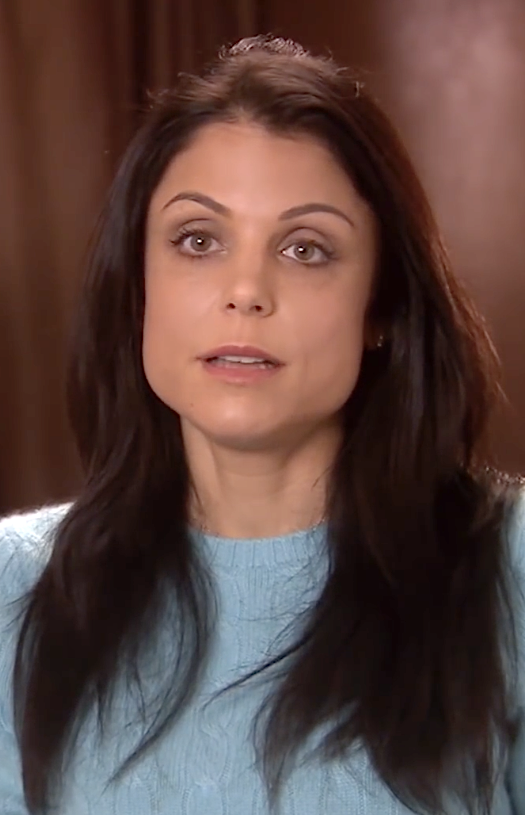
Source · CC BY 3.0 · Displayed crop
The essentials
$80 million is a current publisher estimate, not a verified personal balance sheet. [2]
The buyer recorded $39 million of acquisition cash in the quarter, far below the famous $100–120 million headline. [3]
Frankel retained non-alcohol Skinnygirl rights and still licenses at least one product category in 2026. [10]
Bethenny Frankel’s wealth story is usually compressed into one sentence: she sold Skinnygirl for $100 million. The buyer’s filings, trademark assignments and later licensing disclosures show a more interesting business—and a much less certain personal balance sheet.
This profile displays the current $80 million publisher estimate, then separates it from acquisition cash, earn-outs, retained intellectual property, private-company ownership, licensing and new investments. Net Worth VIP — methodology
01 / The breakthrough
Reality television became a distribution engine
Frankel first reached a national audience as the runner-up on The Apprentice: Martha Stewart in 2005. She joined the original cast of The Real Housewives of New York City in 2008, where Skinnygirl developed in public before spin-offs, a talk show, books and production projects followed. Bravo — Bethenny Frankel biography
Her key early contract decision was to retain ownership of businesses built outside the show. The current publisher estimate repeats a first-season RHONY payment of $7,250, but that small television figure matters less than the retained rights that let her build a consumer brand beside the program. Celebrity Net Worth — Bethenny Frankel
Skinnygirl Cocktails launched into the low-calorie ready-to-drink market and drew Beam’s interest. The eventual deal was substantial, but television exposure, company ownership, the alcohol transaction and Frankel’s personal proceeds are four different things. The last one is not publicly itemized.
02 / Personal life
Bryn, a completed divorce and a new relationship
Frankel has one daughter, Bryn Casey Hoppy, born during her marriage to Jason Hoppy. The couple separated in 2012, and their long-running divorce was finalized in January 2021. Private custody history does not supply a reliable present-day asset or liability figure, so it is included as family context rather than a wealth adjustment. Us Weekly — divorce finalized · IMDb — Bethenny Frankel biography
Her engagement to Paul Bernon ended in 2024. In 2026, Frankel publicly confirmed a relationship with Miami-based executive Shane L. Campbell. Current reporting identifies him as her boyfriend; there is no current marriage or engagement to list. Us Weekly — Shane Campbell
Frankel’s public work also includes disaster response. BStrong operates with Global Empowerment Mission and provides emergency assistance. Program fundraising, distributed aid and donated goods belong to the relief operation; they are not Frankel’s personal revenue or spending unless a filing specifically says so. Global Empowerment Mission — BStrong
03 / The money story
What Beam actually recorded—and what it cannot tell us
Beam’s first-quarter 2011 cash-flow statement records $39.0 million under acquisitions net of cash acquired, and Skinnygirl was its only acquisition that quarter. Its annual filing records $45.6 million for the year. Those primary figures are stronger evidence than the famous $100–120 million reports, but they still record buyer cash at company level—not Frankel’s individual after-tax receipt. Beam 2011 Q1 filing · Beam 2011 annual report
The deal also included contingent payments. Beam’s accounts show about $2 million earned for 2011, $8 million for 2012 and roughly $1 million for 2013: about $11 million total against a contractual maximum of $19 million. The buyer later released $12.2 million of its provision after revising expected sales. A target-based provision is not cash already earned. Beam 2012 annual report · Beam 2013 annual report
The transaction was narrower than a sale of the entire Skinnygirl brand. The recorded assignment covered International Class 33, alcoholic beverages. Nine days earlier, non-alcohol rights moved to Frankel’s company, and the trademark register still reflects retained registrations. A 2026 B&G Foods filing confirms a continuing license with one of her companies for dressings, but no royalty rate or payment is disclosed. USPTO — alcohol-class assignment · USPTO — non-alcohol carve-out · USPTO — Skinnygirl register search · B&G Foods 2026 annual report
The evidence, with its limits
| Source / measure | Public figure | What it establishes |
|---|---|---|
| Celebrity Net Worth — Bethenny Frankel | $80 million | Current publisher estimate; no audited personal balance sheet. |
| Beam 2011 Q1 filing | $39.0 million | Buyer acquisition cash in Q1 2011, when Skinnygirl was its only acquisition. |
| Beam 2011 annual report | $45.6 million | Buyer acquisition cash for full-year 2011; company-level, not personal proceeds. |
| Beam 2012 annual report · Beam 2013 annual report | About $11 million | Earn-outs recorded across three target years, below the $19 million contractual maximum. |
| Beam 2013 annual report | $12.2 million | Provision released after lower estimated sales; not a payment to Frankel. |
| B&G Foods 2026 annual report | Undisclosed | A continuing food-category license is confirmed, while its royalty economics remain private. |
04 / Now
A retained brand, media work and a new beauty investment
Frankel remains founder and chief executive of the broader Skinnygirl lifestyle business and continues the Just B podcast. These activities show an active media and licensing platform, but neither her official site nor the podcast listing provides segment revenue, profit, ownership valuations or personal compensation. Bethenny.com — official site · Apple Podcasts — Just B
In June 2026, dpHUE announced that Frankel acquired a “meaningful” ownership stake and became its Chief Brand Officer. The company says she will work on innovation, marketing and consumer education. The purchase amount, percentage ownership, company valuation, salary and vesting terms are all undisclosed; the stake is real, while its value remains unknown. dpHUE — Frankel joins as investor and CBO · Forbes — Bethenny Frankel’s beauty portfolio
A former management company’s commission suit shows another reason not to equate headline deal value with personal wealth. Its complaint called the $120 million figure “purported” and sought a commission plus damages, but the case ended by joint stipulation without a disclosed judgment. A claim is not a payment, and an estimate in a third company’s filing remains an estimate. Raw Talent complaint · CourtListener — Raw Talent docket · Iconic Brands annual report
Financial record
The money timeline
Joins dpHUE as investor and Chief Brand OfficerCareerNot disclosedDetails & source
Amount and context
Not disclosed · USD
The ownership stake and operating role are confirmed, while all financial terms remain private.
Open source for Joins dpHUE as investor and Chief Brand Officer ↗Divorce from Jason Hoppy finalizedCareerNot disclosedDetails & source
Amount and context
Not disclosed · USD
The marriage ended legally after a prolonged separation and court process.
Open source for Divorce from Jason Hoppy finalized ↗Beam records the Skinnygirl acquisitionDeal$39MDetails & source
Amount and context
$39,000,000 · USD
The buyer recorded $39 million of acquisition cash in the quarter; the assignment covered alcohol rights.
Open source for Beam records the Skinnygirl acquisition ↗RHONY launchesCareerNot disclosedDetails & source
Amount and context
Not disclosed · USD
The original cast role became the distribution platform around which Skinnygirl grew.
Open source for RHONY launches ↗The Apprentice: Martha Stewart premieresCareerNot disclosedDetails & source
Amount and context
Not disclosed · USD
Frankel finished as runner-up and gained her first national television platform.
Open source for The Apprentice: Martha Stewart premieres ↗Amounts describe different financial measures and retain their original currencies. They must not be added together as personal wealth. Our methodology.
Common questions
Questions, answered
What is Bethenny Frankel’s net worth in 2026?
Celebrity Net Worth estimates $80 million. The figure is not audited and cannot be reconstructed from public assets, debts, private-company ownership, licensing income and taxes, so this profile labels it as a publisher estimate.
How much did Bethenny Frankel sell Skinnygirl for?
Beam’s filings record $39.0 million of acquisition cash in the first quarter of 2011 and $45.6 million for the full year, followed by roughly $11 million of recorded earn-outs across three target years. These are company-level transaction figures, not Frankel’s personal after-tax proceeds.
Did Bethenny Frankel sell the entire Skinnygirl brand?
No. The recorded assignment covered alcoholic beverages in International Class 33. Non-alcohol rights were transferred to her company before the deal, and a 2026 public filing still confirms a food-category license with a Frankel company.
Who is Bethenny Frankel dating?
She publicly confirmed a relationship with Shane L. Campbell in 2026. Her engagement to Paul Bernon ended in 2024, and current sources do not report a marriage or engagement to Campbell.
Does Bethenny Frankel have children?
She has one daughter, Bryn Casey Hoppy, with former husband Jason Hoppy. Their divorce was finalized in January 2021.
Follow the evidenceSources & reading23 links
- Net Worth VIP — methodology ↗
Why a publisher estimate, acquisition price, company revenue or property price is not an audited personal balance sheet.
- Celebrity Net Worth — Bethenny Frankel ↗
Publishes an $80 million estimate and now distinguishes the documented Skinnygirl transaction range from the older $100–120 million reports.
- Beam 2011 Q1 filing ↗
The buyer’s quarterly cash-flow statement records $39.0 million of acquisition cash; Skinnygirl was its only acquisition in the quarter.
- Beam 2011 annual report ↗
Records $45.6 million of acquisition cash for the full year.
- Beam 2012 annual report ↗
Tracks the first two earn-out years, including about $2 million and $8 million earned.
- Beam 2013 annual report ↗
Tracks roughly $1 million earned for 2013 and the $12.2 million release after lower estimated sales.
- USPTO — alcohol-class assignment ↗
Recorded asset assignment limited to International Class 33 and signed for the seller by its chief executive.
- USPTO — non-alcohol carve-out ↗
Records the non-alcohol rights moving to Frankel’s company nine days before the alcohol assignment.
- USPTO — Skinnygirl register search ↗
Current register evidence that multiple Skinnygirl registrations remain outside the alcohol buyer.
- B&G Foods 2026 annual report ↗
Confirms a continuing license with a Frankel company for Skinnygirl dressings; royalty terms are not disclosed.
- Raw Talent complaint ↗
Commission complaint describing the reported $120 million price as “purported”; allegations are not findings.
- CourtListener — Raw Talent docket ↗
Shows the 2012 joint stipulation ending the case without a disclosed judgment amount.
- Iconic Brands annual report ↗
A third company repeats an “estimated $100M” purchase price, explicitly marking it as an estimate.
- dpHUE — Frankel joins as investor and CBO ↗
Official June 2026 announcement of a meaningful ownership stake and Chief Brand Officer role; financial terms are not disclosed.
- Forbes — Bethenny Frankel’s beauty portfolio ↗
Current reporting on the dpHUE investment and Frankel’s hands-on beauty strategy.
- Bethenny.com — official site ↗
Official current description of Skinnygirl and the Just B podcast.
- Bravo — Bethenny Frankel biography ↗
Career account covering The Apprentice, RHONY, Skinnygirl, books and production work.
- Us Weekly — Shane Campbell ↗
June 2026 account of Frankel’s current relationship with Shane L. Campbell.
- Us Weekly — divorce finalized ↗
Reports the January 2021 divorce finalization and identifies daughter Bryn.
- IMDb — Bethenny Frankel biography ↗
Full birth name, date and place of birth, former spouses and daughter.
- Global Empowerment Mission — BStrong ↗
Official description of BStrong as a disaster-relief program operated with GEM.
- Apple Podcasts — Just B ↗
Current podcast listing and episode feed.
- Wikimedia Commons — Bethenny Frankel 2009 ↗
Hayu screenshot from a Creative Commons-licensed video, licensed CC BY 3.0.