Net worth & personal profile
Barbara CorcoranNet Worth
The $100M estimate, the disputed $66M company sale, Shark Tank economics, husband Bill Higgins, children Tom and Kate, and what Barbara Corcoran does now.
Source: Celebrity Net Worth estimate. Not an independently verified personal balance sheet.
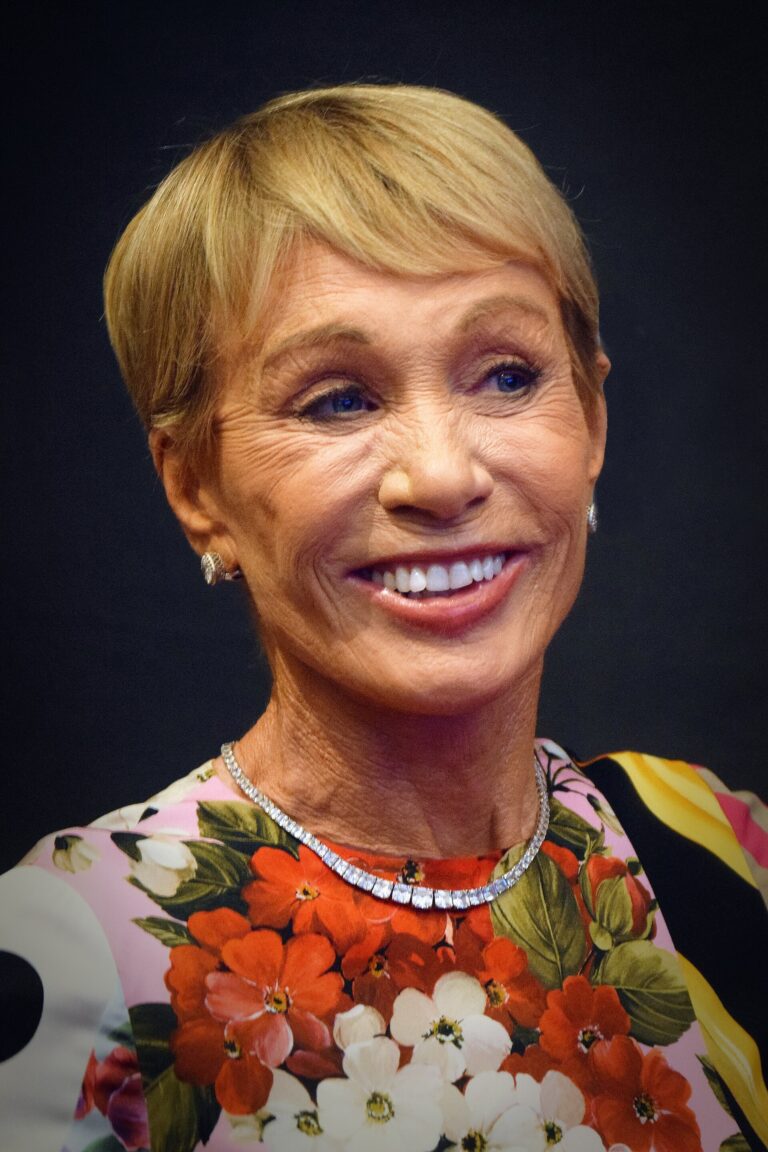
Source · CC BY-SA 4.0 · cropped for display · Displayed crop
The essentials
Celebrity Net Worth estimates $100 million; no audited personal balance sheet is public. [1]
Contemporaneous 2001 reporting said the sale price was undisclosed; industry estimates clustered around $65–70 million. [2]
ABC lists Corcoran as a Shark in season 17, confirming her current television role. [5]
The early years · The career · The money · Current work · Personal life
Barbara Corcoran’s fortune is usually reduced to a neat origin story: a $1,000 loan, a New York brokerage and a $66 million sale. The first and last figures need different levels of confidence.
This profile separates a third-party net-worth estimate from company value, gross sale consideration and television investment commitments. Net Worth VIP — methodology
01 / The $1,000 start
A waitress turned one small loan into a New York real-estate brand
Corcoran says she borrowed $1,000 in 1973 and used it to start a small brokerage in New York City.
The Corcoran Report turned market data into publicity and helped make her name synonymous with Manhattan real estate.
The company’s growth created the central asset in her wealth story, but its annual profits and her ownership history are not fully public.
02 / The company sale
The famous $66 million figure is plausible, but it was never publicly confirmed
Contemporaneous reports agree that NRT acquired The Corcoran Group in 2001 and that the parties did not disclose the price.
The New York Times cited an anonymous estimate near $70 million; the New York Observer reported about $65 million with some industry sources suspecting less.
The often-repeated $66 million comes from Corcoran’s own retelling. Even if accurate, a company price is not the same as her after-tax personal proceeds.
03 / The valuation
$100 million remains a third-party estimate, not a filed balance sheet
Celebrity Net Worth currently estimates Corcoran’s wealth at $100 million.
No public filing discloses her liquid assets, private-company stakes, property debt, investment exits or taxes.
The estimate is best read as an informed range marker supported by a major business exit, television longevity and investment activity.
The evidence, with its limits
| Measure | Public figure | What it actually means |
|---|---|---|
| Net worth | $100M estimate | Third-party estimate, not a financial filing. |
| Corcoran Group sale | $66M often cited | Corcoran’s account; contemporaneous price was undisclosed. |
| Contemporary sale range | $65M–$70M | Press estimates, not confirmed consideration. |
| Shark Tank commitments | $5.3M through season 7 | On-camera offers in a Forbes sample, not all closed. |
| Starting capital | $1,000 loan | Origin figure from Corcoran’s own account. |
04 / Shark Tank
Televised deal totals measure commitments, not the present value of her portfolio
Corcoran has appeared as a Shark since the show’s first season and remains in ABC’s season 17 cast.
Forbes counted $5.3 million of on-camera commitments through seven seasons, while warning that televised offers can change or fail in due diligence.
Private portfolio valuations, dilution, dividends and realized exits remain mostly undisclosed, so viral return claims should not be added directly to net worth.
05 / Family and today
Bill Higgins, two adult children and an active public business career
Corcoran married Bill Higgins in 1988. They have two adult children, Tom and Kate.
ABC lists her among the season 17 Sharks, while her official site continues to market keynotes, media work and business advice.
Her public work now blends television, speaking, social content and private investing rather than running the brokerage that still bears her name.
Financial record
The money timeline
Shark Tank premieresCareerNot disclosedDetails & source
Amount and context
Not disclosed · USD
Corcoran joins the original panel and begins her long-running role as a Shark.
Open source for Shark Tank premieres ↗The Corcoran Group is sold to NRTDealNot disclosedDetails & source
Amount and context
Not disclosed · USD
Contemporaneous reporting says the price was not disclosed; later retellings cite $66 million.
Open source for The Corcoran Group is sold to NRT ↗Marries Bill HigginsPersonalNot disclosedDetails & source
Amount and context
Not disclosed · USD
Corcoran and Higgins marry on Valentine’s Day.
Open source for Marries Bill Higgins ↗Starts a real-estate company with a $1,000 loanCareer$1,000Details & source
Amount and context
$1,000 · USD
Public sources give 1973 as the founding year; the exact day is not published.
Open source for Starts a real-estate company with a $1,000 loan ↗Born in Edgewater, New JerseyPersonalNot disclosedDetails & source
Amount and context
Not disclosed · USD
Barbara Ann Corcoran is born in New Jersey.
Open source for Born in Edgewater, New Jersey ↗Amounts describe different financial measures and retain their original currencies. They must not be added together as personal wealth. Our methodology.
Common questions
Questions, answered
What is Barbara Corcoran’s net worth?
Celebrity Net Worth estimates Barbara Corcoran’s net worth at $100 million. It is a third-party estimate rather than a disclosed balance sheet.
Did Barbara Corcoran sell her company for $66 million?
Corcoran has said the sale price was $66 million, but contemporaneous reports said the price was undisclosed. Press estimates at the time were roughly $65 million to $70 million.
Who is Barbara Corcoran married to?
She has been married to Bill Higgins since 1988.
How many children does Barbara Corcoran have?
She has two adult children, a son named Tom and a daughter named Kate.
Is Barbara Corcoran still on Shark Tank?
Yes. ABC lists her in the season 17 cast, and she remains active as a speaker and private investor.
Follow the evidenceSources & reading9 links
- Celebrity Net Worth — Barbara Corcoran ↗
$100 million estimate; biography and career context.
- The Wall Street Journal via Corcoran — 2001 sale ↗
Contemporaneous report: NRT bought the firm for an undisclosed sum.
- The New York Observer — Corcoran sale ↗
Contemporaneous industry estimate of about $65 million, with uncertainty.
- Forbes — Shark Tank commitments ↗
On-camera commitments through seven seasons and the distinction between offers and closed deals.
- ABC — Shark Tank season 17 ↗
Official current season page and cast listing.
- Barbara Corcoran — speaking ↗
Official speaking activity and her account of starting the company with a $1,000 loan.
- Yahoo Entertainment — Bill Higgins ↗
Marriage to Bill Higgins since 1988 and children Tom and Kate.
- Wikimedia Commons — Barbara Corcoran at PaleyFest 2023 ↗
Portrait by Philip Romano, licensed CC BY-SA 4.0.
- Net Worth VIP — methodology ↗
How estimates, sale prices, on-air commitments and private wealth are separated.