Net worth & personal profile
Yo GottiNet Worth
The $100 million Forbes estimate tested against CMG ownership, music rights, an undisclosed Interscope deal, D.C. United, Angela Simmons and his private family life.
Source: Forbes estimate. Not an independently verified personal balance sheet.
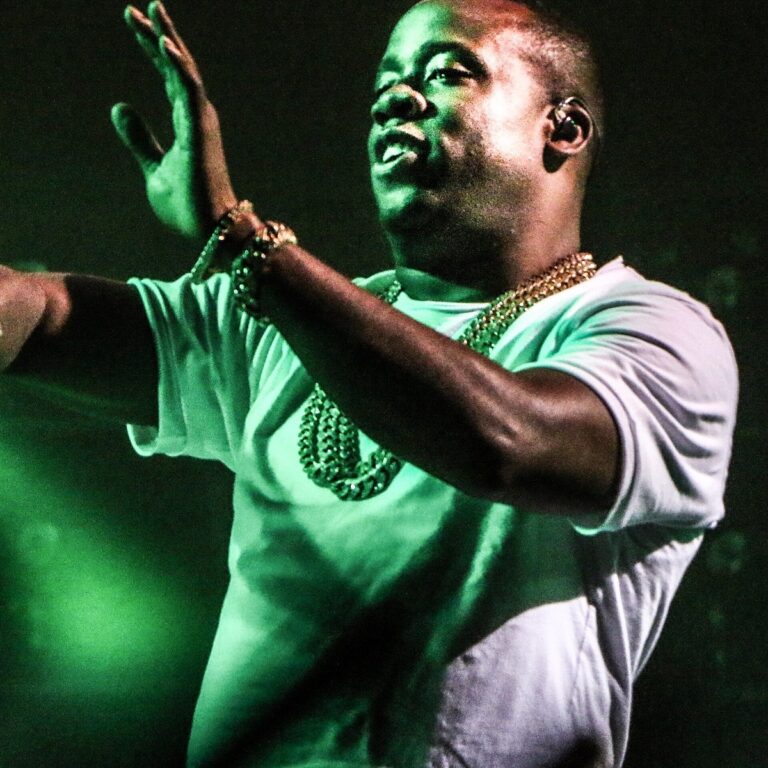
Source · CC BY 2.0 · Displayed crop
The essentials
Forbes estimates about $100 million, but no public filing supplies Yo Gotti’s assets, debts, taxes or CMG equity value. [1]
CMG’s Interscope partnership is real; the official announcement discloses no price, ownership percentage or legal structure. [3]
The famous $300 million catalogue transaction was Irv Gotti’s Murder Inc. deal, not a sale by Yo Gotti. [11]
Career · Family · CMG · Assets · Now
Yo Gotti’s profile has two stories that are often collapsed into one. The documented story is a long rap career, CMG, a major-label partnership, a minority soccer investment and other private businesses. The headline number is a Forbes estimate. Public records do not show the balance sheet needed to turn those assets into an independently verified $100 million total.
This update keeps the old article’s strongest rights and contract research, removes invented annual-income buckets, and makes the biggest identity error impossible to miss: Yo Gotti did not sell a catalogue for $300 million. Forbes — Inside Yo Gotti’s $100 Million Music Empire · Music Business Worldwide — Irv Gotti catalogue deal · Net Worth VIP — methodology
01 / The breakthrough
From North Memphis mixtapes to a national label platform
Born Mario Mims and raised in Frayser in North Memphis, Yo Gotti built a regional audience from the late 1990s through independent albums and mixtapes. Forbes identifies 2016’s The Art of Hustle—which reached No. 4 on the Billboard 200—and “Down in the DM” as the national breakthrough. Forbes — Inside Yo Gotti’s $100 Million Music Empire
RIAA certifications document commercial scale across singles including “Down in the DM” and “Rake It Up.” They measure certified units, not label splits, advances, recoupment, publishing shares, management fees or taxes. RIAA — Yo Gotti certifications
02 / Love & family
Angela Simmons confirmed the split; his children remain private
Yo Gotti and Angela Simmons made their relationship public at the end of 2022. In a June 2025 interview with Angie Martinez, Simmons directly said she was single and no longer with him. She declined private details. No reliable source reviewed here confirms a new partner. Angie Martinez IRL — Angela Simmons interview
He is a father, but the internet’s exact child counts are poorly sourced. In a direct 2015 VICE interview, he discussed three children then aged five, ten and eleven; D.C. United later quoted him saying his son introduced him to soccer. That proves fatherhood and at least three children, not every name, mother or a current total. VICE — Yo Gotti interview · D.C. United — ownership group announcement
03 / CMG
The likely wealth engine is also the least transparent asset
Yo Gotti formed his label in 2012 as Cocaine Muzik Group and later renamed it Collective Music Group. Forbes describes him as founder and CEO; its artist-development record includes Moneybagg Yo, 42 Dugg, EST Gee and GloRilla. The Associated Press documents GloRilla’s 2022 signing and his active mentorship. Forbes — Inside Yo Gotti’s $100 Million Music Empire · Associated Press — GloRilla profile
Interscope announced a partnership with CMG on June 2, 2021. The release describes collaboration on developing the roster but gives no cash amount, equity percentage, distribution split, term or valuation. Calling it an “eight-figure sale” goes beyond the primary document. Interscope — CMG partnership announcement
The Copyright Office evidence adds a useful distinction. The prior registration review found Gotti World Publishing across many composition records while major labels appeared across the sound-recording side. Songwriting and master rights are different assets; neither search supplies royalty statements or a current catalogue valuation. U.S. Copyright Office — Yo Gotti registrations
The evidence, with its limits
| Source / measure | Public figure | What it establishes |
|---|---|---|
| Forbes — Inside Yo Gotti’s $100 Million Music Empire | $100M | Forbes estimate; no disclosed personal balance sheet or CMG valuation. |
| Interscope — CMG partnership announcement | Terms undisclosed | Official CMG/Interscope partnership; no sale price or ownership split. |
| Music Business Worldwide — Irv Gotti catalogue deal | $300M headline | Irv Gotti/Murder Inc. transaction; unrelated to Yo Gotti’s catalogue. |
| SEC — Motorsport Games investment announcement | $36.5M group placement | Total commitments from several investors; Yo Gotti’s amount is not stated. |
| North Carolina lawyer — $6.6 million judgment | $6.6M judgment | 2019 trebled award reported by the plaintiff’s law firm; not proof of final payment. |
| RIAA — Yo Gotti certifications | Multiple certifications | Commercial unit thresholds, not royalties or personal cash. |
04 / Assets & liabilities
Visible luxury is evidence of spending, not a balance sheet
Forbes reports a roughly 10,000-square-foot mansion north of Malibu, the Prive restaurant in Memphis, a D.C. United minority stake and a watch collection Yo Gotti valued at about $10 million. These support substantial assets, but none comes with a current independent appraisal, debt schedule, ownership percentage or liquidity figure. Forbes — Inside Yo Gotti’s $100 Million Music Empire · D.C. United — ownership group announcement
A 2020 SEC exhibit names him among investors in a $36.5 million private placement. That is the whole group’s commitment, including institutional funds and other artists; it does not disclose his cheque. Likewise, the club’s value cannot be multiplied by a guessed stake and called personal wealth. SEC — Motorsport Games investment announcement · D.C. United — ownership group announcement
A North Carolina dispute produced a $6.6 million trebled judgment in 2019. The cited plaintiff-law-firm account records an unsuccessful attempt to set it aside but does not establish that the full award ultimately left his balance sheet. North Carolina lawyer — $6.6 million judgment
05 / Now
A private-company operator with a public $100 million estimate
Forbes’s profile, updated in August 2025, still identifies Yo Gotti as CMG founder and CEO and describes UCLA Anderson business courses. His official site remains active, while public financial statements for CMG remain unavailable. Forbes — Inside Yo Gotti’s $100 Million Music Empire · Yo Gotti — official website
The responsible conclusion is narrow: $100 million is the best current named publisher estimate, not an audited fact. CMG may be his most valuable asset, but its ownership, profits and market value are private. Forbes — Inside Yo Gotti’s $100 Million Music Empire · Celebrity Net Worth — Yo Gotti · Net Worth VIP — methodology
Financial record
The money timeline
Joins the D.C. United ownership groupBusinessNot disclosedDetails & source
Amount and context
Not disclosed · USD
The club confirms the minority investment but does not disclose its size or price.
Open source for Joins the D.C. United ownership group ↗CMG partners with InterscopeDealNot disclosedDetails & source
Amount and context
Not disclosed · USD
The companies announce artist-development work without financial or ownership terms.
Open source for CMG partners with Interscope ↗$6.6 million judgment survives a set-aside motionLawsuit$6.6MDetails & source
Amount and context
$6,600,000 · USD
A trebled court award is documented; final payment is not established by the cited source.
Open source for $6.6 million judgment survives a set-aside motion ↗The Art of Hustle becomes the breakthroughCareerNot disclosedDetails & source
Amount and context
Not disclosed · USD
The album reaches No. 4 while “Down in the DM” expands his national audience.
Open source for The Art of Hustle becomes the breakthrough ↗Builds the label that becomes CMGBusinessNot disclosedDetails & source
Amount and context
Not disclosed · USD
The independent label becomes the platform for a growing Memphis-centered roster.
Open source for Builds the label that becomes CMG ↗Amounts describe different financial measures and retain their original currencies. They must not be added together as personal wealth. Our methodology.
Common questions
Questions, answered
What is Yo Gotti’s net worth in 2026?
Forbes and Celebrity Net Worth publish estimates of about $100 million. No public personal balance sheet or CMG valuation independently verifies that figure.
Did Yo Gotti sell his music catalogue for $300 million?
No. The $300 million transaction involved Irv Gotti and Murder Inc. Yo Gotti is a different person and no comparable catalogue sale by him is documented.
Who is Yo Gotti dating now?
No current partner was reliably confirmed in the sources reviewed. Angela Simmons said in June 2025 that she was single and no longer with Yo Gotti.
How many children does Yo Gotti have?
A direct 2015 interview confirms at least three children. A reliable current total and complete family list are not public, so higher exact counts are not presented as fact.
Does Yo Gotti own CMG and his masters?
He is publicly identified as CMG’s founder and CEO. The ownership percentage and company valuation are private. Copyright registrations also distinguish composition interests from sound-recording rights, many of which name label entities.
Follow the evidenceSources & reading16 links
- Forbes — Inside Yo Gotti’s $100 Million Music Empire ↗
Forbes estimate, CMG leadership, career, home, restaurant, watches, D.C. United and business education; updated August 27, 2025.
- Celebrity Net Worth — Yo Gotti ↗
Second $100 million publisher estimate, updated July 9, 2026; no public personal balance sheet.
- Interscope — CMG partnership announcement ↗
Official June 2021 announcement; no price, equity percentage or contract structure.
- D.C. United — ownership group announcement ↗
Official confirmation that Mario “Yo Gotti” Mims joined the ownership group in September 2021; investment size undisclosed.
- Associated Press — GloRilla profile ↗
2024 reporting and direct comments on GloRilla, whom he signed to CMG in 2022.
- RIAA — Yo Gotti certifications ↗
Official certification search; unit thresholds show reach, not personal royalties.
- U.S. Copyright Office — Yo Gotti registrations ↗
Registration search used to distinguish sound-recording claimants and composition ownership.
- U.S. Copyright Office — recorded document V3538D983 ↗
Early works appear on a label collateral schedule without Yo Gotti being a party.
- SEC — Motorsport Games investment announcement ↗
$36.5 million group placement naming several investors; his individual commitment is unstated.
- North Carolina lawyer — $6.6 million judgment ↗
Plaintiff-law-firm account of the 2019 judgment; partisan source and not proof of final payment.
- Music Business Worldwide — Irv Gotti catalogue deal ↗
$300 million headline belongs to Irv Gotti and Murder Inc., not Yo Gotti or CMG.
- VICE — Yo Gotti interview ↗
Direct 2015 interview confirming fatherhood and three children then aged five, ten and eleven.
- Angie Martinez IRL — Angela Simmons interview ↗
Direct June 2025 interview in which Simmons says she is single and no longer with Yo Gotti.
- Yo Gotti — official website ↗
Current first-party music and merchandise presence; no financial disclosure.
- Wikimedia Commons — Yo Gotti 2013 ↗
The Come Up Show concert photograph, reviewed on Commons and licensed CC BY 2.0.
- Net Worth VIP — methodology ↗
Why private-company value, gross sales, certifications and undisclosed contracts are not personal wealth.