Net worth & personal profile
Moneybagg YoNet Worth
The disputed $6 million estimate, fiancée Ari Fletcher, eight children, a documented $90,000 appearance fee and the split between publishing and masters.
Moneybagg Yo’s net worth is not independently verifiable. Two publisher pages now show $6 million, but they do not disclose a balance sheet and the earlier number stayed unchanged across major releases and certifications. The page therefore publishes the evidence, not a false exact total.
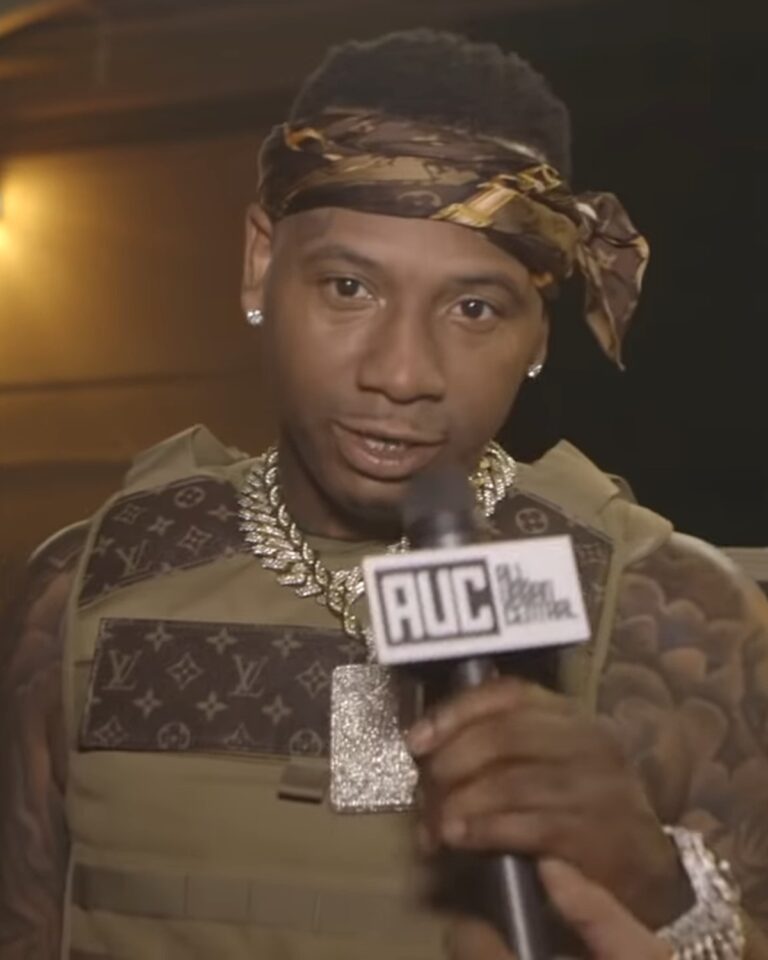
Source · CC BY 3.0 · Displayed crop
The essentials
The repeated $6 million figure is not independent confirmation: the sources disclose no asset, debt, tax or royalty calculation. [1]
A federal ruling records a signed $90,000 fee for two or three songs at one 2023 club appearance; contract value is not take-home income. [3]
The reviewed Copyright Office sample points to label ownership of most sound recordings while Moneybagg Yo appears as co-owner on some compositions. [4]
Career · Love & family · Money · The evidence
Moneybagg Yo’s business story is more useful than a recycled wealth number. Public records reveal one signed appearance fee and a sharp split between the rights attached to recordings and compositions, while the assets that would determine personal wealth remain private.
Celebrity Net Worth and Wealthy Gorilla both publish $6 million. The number is not supported by a public balance sheet, and historical archive checks showed the earlier $5 million figure sitting unchanged through a No. 1 album, new releases and continuing certifications. The main field stays empty. Celebrity Net Worth — Moneybagg Yo · Wealthy Gorilla — Moneybagg Yo · Net Worth VIP — methodology
01 / The breakthrough
A Memphis mixtape run reached No. 1
Born DeMario DeWayne White Jr., Moneybagg Yo built a Memphis following through a high-volume mixtape run before signing with Yo Gotti’s CMG in 2016. Federal 3X reached the Billboard 200 top five in 2017. XXL — Moneybagg Yo interview
A Gangsta’s Pain became his first Billboard 200 No. 1 in 2021, driven by tracks including Wockesha and Time Today. The AP describes Speak Now as his fifth studio album in 2024; chart units and certifications show audience scale, not personal cash. Associated Press — Speak Now interview · RIAA — Moneybagg Yo certifications
02 / Love & family
Ari Fletcher says an official wedding is planned
Moneybagg Yo and influencer-entrepreneur Ari Fletcher have publicly discussed their relationship since 2019. In June 2026, Fletcher displayed an engagement ring and said she was planning an official destination-and-traditional wedding for May 2027. That supports “engaged”; hints about a private ceremony are not enough to label them legally married. PAPER — Moneybagg Yo and Ari Fletcher · HotNewHipHop — Ari Fletcher engagement statement
In a 2021 XXL interview, Moneybagg Yo confirmed eight children—four boys and four girls—and spoke about balancing fatherhood with touring and recording. The children’s privacy is respected; the profile does not turn unverified names or parentage lists into biography facts. XXL — Moneybagg Yo interview
03 / Rights & live fees
$90,000 is documented; master ownership is limited
A federal court reviewed a signed contract for a $90,000 appearance on August 24, 2023: two or three songs in a club VIP section. The later ruling established default liability but said damages had not yet been proven in that order. The fee was contract value, before management, travel, security, tax and any dispute over payment. U.S. District Court — August 2024 ruling
Our Copyright Office review found 106 sound-recording registrations naming him: 96 marked employer for hire, with the label group appearing as author and rights holder on 81. Moneybagg Yo appeared as a rights holder on one pre-label 2017 recording. By contrast, he appeared as co-owner on 24 of 94 reviewed compositions. Public registrations can miss voluntary, unrecorded transactions, but they do not support a claim that he owns most masters. U.S. Copyright Office — Moneybagg Yo search
The evidence, with its limits
| Source / measure | Public figure | What it establishes |
|---|---|---|
| Celebrity Net Worth — Moneybagg Yo | $6 million | Current publisher estimate without a disclosed balance sheet. |
| U.S. District Court — August 2024 ruling | $90,000 | Signed price for one 2023 appearance; not verified net income. |
| U.S. District Court — August 2024 ruling | $105,000 claimed | Fee plus alleged guest refunds sought in litigation; not the amount proven in the cited ruling. |
| U.S. Copyright Office — Moneybagg Yo search | 106 recordings / 94 compositions | Reviewed registration sets; ownership differs by copyright type. |
| RIAA — Moneybagg Yo certifications | 50+ certifications | Commercial thresholds reported by the label/RIAA, not personal royalty totals. |
04 / Now
A 2026 return and a label-building role
After a period away from major releases, I See Why arrived July 24, 2026 through CMG, N-Less and Interscope. The official site makes it the current lead release, while the label describes the next phase as Foreva Hold YO Peace. Universal Music Canada — I See Why · Moneybagg Yo — official site
Universal also identifies YTB Fatt, Big Homiie G and Tripstar as artists on Bread Gang Entertainment. That establishes an executive and label-building role, but without ownership percentages, contracts or financial statements it cannot be converted into a personal company valuation. Universal Music Canada — I See Why
Financial record
The money timeline
Releases I See WhyCareerNot disclosedDetails & source
Amount and context
Not disclosed · USD
The single starts his current release phase after time away from music.
Open source for Releases I See Why ↗Court enters default liabilityLawsuitNot disclosedDetails & source
Amount and context
Not disclosed · USD
The cited order rejects punitive damages and requires further proof of loss; no final amount is supplied there.
Open source for Court enters default liability ↗Signs a $90,000 appearance contractSingle-project fees and prizes$90,000Details & source
Amount and context
$90,000 · USD
The contract covers two or three songs for one club appearance; gross contract value.
Open source for Signs a $90,000 appearance contract ↗A Gangsta’s Pain reaches No. 1CareerNot disclosedDetails & source
Amount and context
Not disclosed · USD
His first Billboard 200 No. 1 creates the defining commercial breakthrough.
Open source for A Gangsta’s Pain reaches No. 1 ↗Signs with Yo Gotti’s CMGDealNot disclosedDetails & source
Amount and context
Not disclosed · USD
The Memphis mixtape run becomes a national label partnership.
Open source for Signs with Yo Gotti’s CMG ↗Amounts describe different financial measures and retain their original currencies. They must not be added together as personal wealth. Our methodology.
Common questions
Questions, answered
What is Moneybagg Yo’s net worth in 2026?
No independently verifiable current figure is available. Two publisher pages show $6 million, but neither discloses a balance sheet or a reproducible asset-and-debt calculation.
Who is Moneybagg Yo’s current partner?
Ari Fletcher publicly described them as engaged in June 2026 and said an official wedding is planned for May 2027. Reports implying they already married privately remain unconfirmed.
How many children does Moneybagg Yo have?
He confirmed eight children—four sons and four daughters—in a 2021 XXL interview.
Does Moneybagg Yo own his masters?
The reviewed Copyright Office registrations do not support broad master ownership. Most sampled sound recordings were works made for hire for label entities; composition records showed more co-ownership.
How much does Moneybagg Yo charge for a show?
One unusually well-documented 2023 contract listed $90,000 for two or three songs at a club appearance. It is a single contract value, not a universal booking rate or take-home income.
Follow the evidenceSources & reading13 links
- Celebrity Net Worth — Moneybagg Yo ↗
$6 million publisher estimate updated June 23, 2026; no disclosed balance sheet.
- Wealthy Gorilla — Moneybagg Yo ↗
$6 million derivative estimate; historical snapshots remained unchanged through major career events.
- U.S. District Court — August 2024 ruling ↗
Signed $90,000 appearance contract and default-liability ruling; damages not proven in this order.
- U.S. Copyright Office — Moneybagg Yo search ↗
Public registration records used for the recording/composition ownership review.
- RIAA — Moneybagg Yo certifications ↗
Certification records; commercial thresholds, not royalty statements.
- Associated Press — Speak Now interview ↗
2021 No. 1 breakthrough, 2024 album and artist interview.
- Universal Music Canada — I See Why ↗
Current July 2026 single, label configuration, Bread Gang roster and forthcoming phase.
- Moneybagg Yo — official site ↗
Current official music page promoting I See Why.
- XXL — Moneybagg Yo interview ↗
Legal name, eight children, fatherhood, Bread Gang and career history.
- PAPER — Moneybagg Yo and Ari Fletcher ↗
Direct joint interview about their relationship and family priorities.
- HotNewHipHop — Ari Fletcher engagement statement ↗
June 2026 report quoting Fletcher saying she is planning an official May 2027 wedding.
- Wikimedia Commons — Moneybagg Yo 2018 ↗
ALL URBAN CENTRAL video still, reviewed and licensed CC BY 3.0.
- Net Worth VIP — methodology ↗
Why gross fees, claims, label ownership and private wealth remain separate.