Net worth & personal profile
Tony HawkNet Worth
The $140 million estimate, wife Catherine Goodman, four children, the 900, Birdhouse, apparel sale, video-game royalties, nonprofit finances and his current projects—using company filings where the public record permits.
Source: Celebrity Net Worth — Tony Hawk. Not an independently verified personal balance sheet.

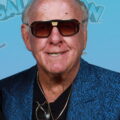
Source · CC BY-SA 4.0 · Displayed crop
The essentials
$140 million is a current publisher estimate, not a verified personal balance sheet. [2]
Activision reported $1.3 billion in cumulative game revenue by 2008; Hawk’s contractual royalty rate remains private. [9]
Quiksilver acquired Hawk Designs for $1.29 million in 2000; later Kohl’s royalties belonged to successive trademark owners. [5]
Tony Hawk built one of action sports’ most durable personal brands, but the public record contains several different kinds of money: his own early royalties, corporate acquisition prices, Activision’s game revenue, private equity and nonprofit accounts. They cannot be added together as if each amount sat in his bank account.
This profile uses the current $140 million publisher estimate as a clearly labeled reference point. It then shows what SEC filings and Hawk’s own account actually establish—and where the contracts remain private. Net Worth VIP — methodology
01 / The breakthrough
From teenage professional to the first 900
Hawk began skating at nine, turned professional at 14 and, according to his official biography, was considered the leading competitive skateboarder by 16. His vert success arrived before mainstream skateboarding salaries, which makes his own recollection of the market unusually useful: in 1987 and 1988 he says board royalties reached about $20,000 a month at $1.50 per board. Tony Hawk — official biography · Jenkem — Hawk on the early 1990s
The boom collapsed. Hawk says monthly income fell from roughly $4,000 to $2,000 in 1991, forcing him to sell his house and take a second mortgage. In 1992, he and Per Welinder each put $40,000 into the new Birdhouse company; Hawk says his share came from that mortgage. By 1994 he was again skating demos for about $100 a day and making roughly $30,000 for the year. These are historical first-person figures, not a current balance sheet. Jenkem — Hawk on the early 1990s
At the 1999 X Games in San Francisco, Hawk landed the first 900 in skateboarding history. The trick transformed his reach at exactly the moment Activision was preparing the first Tony Hawk’s Pro Skater game. Athletic breakthrough and commercial timing reinforce each other here, but neither tells us how much wealth he retained after tax, spending and investment. X Games — history
02 / Personal life
Catherine Goodman, four children and a first grandchild
Hawk has been married to Catherine Goodman since 2015. Public biographical sources identify four children from earlier relationships: Riley, Spencer, Keegan and Kadence. Riley became a professional skateboarder and musician; the other children have largely kept lower public profiles. Biography — Tony Hawk · E! News — Hawk’s family
In 2025, Hawk spoke publicly about becoming a grandfather after Riley and Frances Bean Cobain welcomed their son Ronin. That connection attracts public interest because it links two famous families, but it is family context rather than financial evidence. No credible public source supplies private trusts, inheritances or household arrangements, so this profile does not manufacture them. E! News — Hawk’s family
The useful current relationship fact is simple: Catherine remains identified as his wife, and Hawk’s public work continues alongside a multigenerational family. Gossip claims about prior divorces, settlements or family money need source documents before they can affect a wealth estimate. Biography — Tony Hawk
03 / The money story
Games made billions for Activision; Hawk’s royalty stayed private
Before the first game shipped in 1999, Hawk says Activision offered him $500,000 to surrender the royalty structure. He declined and chose a per-unit royalty, later describing that as his best financial decision. This establishes the contract’s direction, but not the percentage, deductions, term-by-term changes or total after-tax proceeds. CNBC — the $500,000 decision
Activision’s filings supply the company side. It reported more than $800 million of net revenue from the first five Tony Hawk titles and $1.3 billion across nine titles by March 2008. Those are Activision revenues—not Hawk’s earnings. The filings describe an exclusive license through 2015 but do not state his royalty rate, so applying an invented percentage would create false precision. Activision 2004 Form 10-K · Activision 2008 Form 10-K
The clothing history is more concrete. Quiksilver’s filing records $500,000 paid at closing, another $500,000 in later payments and $290,000 of assumed bank debt for Hawk Designs, a $1.29 million acquisition cost. Kohl’s later licensed the line from Quiksilver, and Cherokee bought the trademarks for $19 million in 2014. The subsequent retail royalties went to the trademark owners; the filings do not show those sums flowing personally to Hawk. Quiksilver 2000 Form 10-K · Kohl’s 2005 Form 10-Q · Cherokee acquisition filing
The evidence, with its limits
| Source / measure | Public figure | What it establishes |
|---|---|---|
| Celebrity Net Worth — Tony Hawk | $140 million | Current outside estimate; no audited schedule of assets and liabilities. |
| Jenkem — Hawk on the early 1990s | $20,000 per month | Hawk’s recollection of peak late-1980s board royalties; historical gross income. |
| Jenkem — Hawk on the early 1990s | $40,000 | Hawk’s stated 1992 investment in Birdhouse, funded from a second mortgage. |
| Quiksilver 2000 Form 10-K | $1.29 million | Quiksilver’s acquisition cost for Hawk Designs; not necessarily Hawk’s personal proceeds. |
| Activision 2008 Form 10-K | $1.3 billion | Activision cumulative net revenue across nine games by March 2008; Hawk’s rate is undisclosed. |
| Cherokee acquisition filing | $19 million | Cherokee’s 2014 purchase price for the apparel trademarks from Quiksilver. |
| Associated Press — the 900 deck auction | $1.15 million | 2025 auction price for the 1999 900 deck; part pledged to the nonprofit. |
04 / Now
Birdhouse, a renewed game franchise and public skateparks
Birdhouse did not disappear in a sale by Hawk. In October 2008, he acquired the remaining interests from Blitz Distribution and folded the skateboard company into Tony Hawk, Inc.; the price was not disclosed. As a private business, Birdhouse has no public accounts from which to calculate Hawk’s current equity value. SGB Media — Hawk acquires Birdhouse
His investment activity also includes a disclosed but unquantified participation in Liquid Death’s $15 million 2021 financing. The round establishes that Hawk invested alongside other participants, yet it does not reveal his check size, ownership percentage, later dilution or liquidity. Treating the company’s later valuation as his personal holding would be unsupported. BevNET — Liquid Death financing
The franchise remains active. Activision released Tony Hawk’s Pro Skater 3 + 4 on July 11, 2025, and the official Vert Alert results show the competition operating again in Salt Lake City in August 2026. Neither public source discloses Hawk’s current compensation. Activision — Tony Hawk’s Pro Skater 3 + 4 · Tony Hawk’s Vert Alert — 2026 results
His nonprofit is financially separate from him. The Skatepark Project’s latest IRS-derived filing reports $2.68 million of 2024 revenue, $7.03 million of expenses and negative $653,533 in net assets. Anthony Hawk is listed as president with $0 compensation. These are the charity’s accounts, not his assets, and the sharp 2024 change deserves monitoring rather than being folded into his net worth. ProPublica — The Skatepark Project · The Skatepark Project — about
Financial record
The money timeline
The 1999 900 deck sells for $1.15 millionAuction$1.15MDetails & source
Amount and context
$1,150,000 · USD
Part of the auction proceeds was pledged to The Skatepark Project.
Open source for The 1999 900 deck sells for $1.15 million ↗Quiksilver acquires Hawk DesignsAcquisition$1.29MDetails & source
Amount and context
$1,290,000 · USD
The SEC filing records a $1.29 million acquisition cost, not a disclosed personal payout to Hawk.
Open source for Quiksilver acquires Hawk Designs ↗Chooses a per-unit video-game royaltyOffer_declined$500,000Details & source
Amount and context
$500,000 · USD
Hawk says he declined a $500,000 buyout before the first game launched; the eventual royalty rate is private.
Open source for Chooses a per-unit video-game royalty ↗Lands the first skateboard 900CareerNot disclosedDetails & source
Amount and context
Not disclosed · USD
The X Games milestone became Hawk’s defining competitive breakthrough.
Open source for Lands the first skateboard 900 ↗Co-founds Birdhouse with a $40,000 investmentInvestment$40,000Details & source
Amount and context
$40,000 · USD
Hawk says he and Per Welinder each invested $40,000; his contribution came from a second mortgage.
Open source for Co-founds Birdhouse with a $40,000 investment ↗Amounts describe different financial measures and retain their original currencies. They must not be added together as personal wealth. Our methodology.
Common questions
Questions, answered
What is Tony Hawk’s net worth in 2026?
Celebrity Net Worth estimates $140 million as of March 2026. The figure is not audited and cannot be fully reconstructed because Hawk’s game royalties, private-company stakes, property, debt and taxes are not publicly itemized.
How much did Tony Hawk make from the video games?
The exact amount is not public. Hawk says he rejected a $500,000 buyout and chose a per-unit royalty. Activision reported $1.3 billion in cumulative net revenue across nine titles by March 2008, but that company revenue is not Hawk’s income and the filings do not disclose his royalty rate.
Does Tony Hawk still own Birdhouse?
The latest cited ownership transaction runs in that direction: in 2008 Hawk acquired all remaining Birdhouse interests from Blitz Distribution and folded the company into Tony Hawk, Inc. Its current finances and ownership details remain private.
Who is Tony Hawk married to, and how many children does he have?
He has been married to Catherine Goodman since 2015. He has four children: Riley, Spencer, Keegan and Kadence, and became a grandfather through Riley in 2024.
Is The Skatepark Project part of Tony Hawk’s net worth?
No. It is a separate nonprofit. The 2024 filing lists Hawk as president with $0 compensation; the organization’s assets, liabilities, donations and expenses do not belong to him personally.
Follow the evidenceSources & reading21 links
- Net Worth VIP — methodology ↗
How this site separates estimates, company revenue, funding, royalties and nonprofit assets from personal wealth.
- Celebrity Net Worth — Tony Hawk ↗
Publishes a $140 million estimate, updated March 19, 2026, without a current personal asset-and-debt schedule.
- Tony Hawk — official biography ↗
Official career summary, Birdhouse, the Activision franchise and current Tony Hawk’s Pro Skater 3 + 4 work.
- X Games — history ↗
Official X Games history records Hawk landing the first skateboard 900 at the 1999 San Francisco event.
- Quiksilver 2000 Form 10-K ↗
SEC filing records Quiksilver’s $1.29 million acquisition cost for Hawk Designs and the trademark allocation.
- Kohl’s 2005 Form 10-Q ↗
SEC filing identifies Quiksilver as Kohl’s counterparty for the Tony Hawk apparel license.
- Cherokee acquisition filing ↗
SEC filing records Cherokee’s $19 million purchase of the apparel trademarks and the Kohl’s minimum royalty guarantee.
- Activision 2004 Form 10-K ↗
SEC filing reports more than $800 million of net revenue across the first five Tony Hawk games and describes the license.
- Activision 2008 Form 10-K ↗
SEC filing reports $1.3 billion of cumulative net revenue across nine Tony Hawk titles by March 2008; it does not disclose Hawk’s royalty rate.
- CNBC — the $500,000 decision ↗
Hawk says he declined a $500,000 buyout for the first game and chose a per-unit royalty.
- Jenkem — Hawk on the early 1990s ↗
First-person account of board royalties, the skating downturn, his second mortgage and the $40,000 Birdhouse investment.
- SGB Media — Hawk acquires Birdhouse ↗
Reports Hawk’s 2008 acquisition of all remaining Birdhouse interests from Blitz Distribution; price undisclosed.
- BevNET — Liquid Death financing ↗
Reports Hawk among participants in Liquid Death’s $15 million 2021 financing; his stake size is not disclosed.
- Associated Press — the 900 deck auction ↗
Reports the September 2025 sale of Hawk’s 1999 900 deck for $1.15 million, with part of the proceeds pledged to his nonprofit.
- ProPublica — The Skatepark Project ↗
IRS-derived filing data through 2024; the latest filing reports $2.68 million revenue, $7.03 million expenses and negative $653,533 net assets.
- The Skatepark Project — about ↗
Official nonprofit history says Hawk founded the organization in 2002 to expand access to safe, inclusive skateparks.
- Activision — Tony Hawk’s Pro Skater 3 + 4 ↗
Official game page records the July 11, 2025 release.
- Tony Hawk’s Vert Alert — 2026 results ↗
Official results from the August 2026 Salt Lake City vert competition.
- Biography — Tony Hawk ↗
Biographical reference for full name, birthplace, marriage to Catherine Goodman and children Riley, Spencer, Keegan and Kadence.
- E! News — Hawk’s family ↗
Current family interview identifying Hawk’s four children and first grandchild.
- Wikimedia Commons — Tony Hawk in 2023 ↗
CC BY-SA 4.0 portrait photographed by Christopher Michel on November 8, 2023.