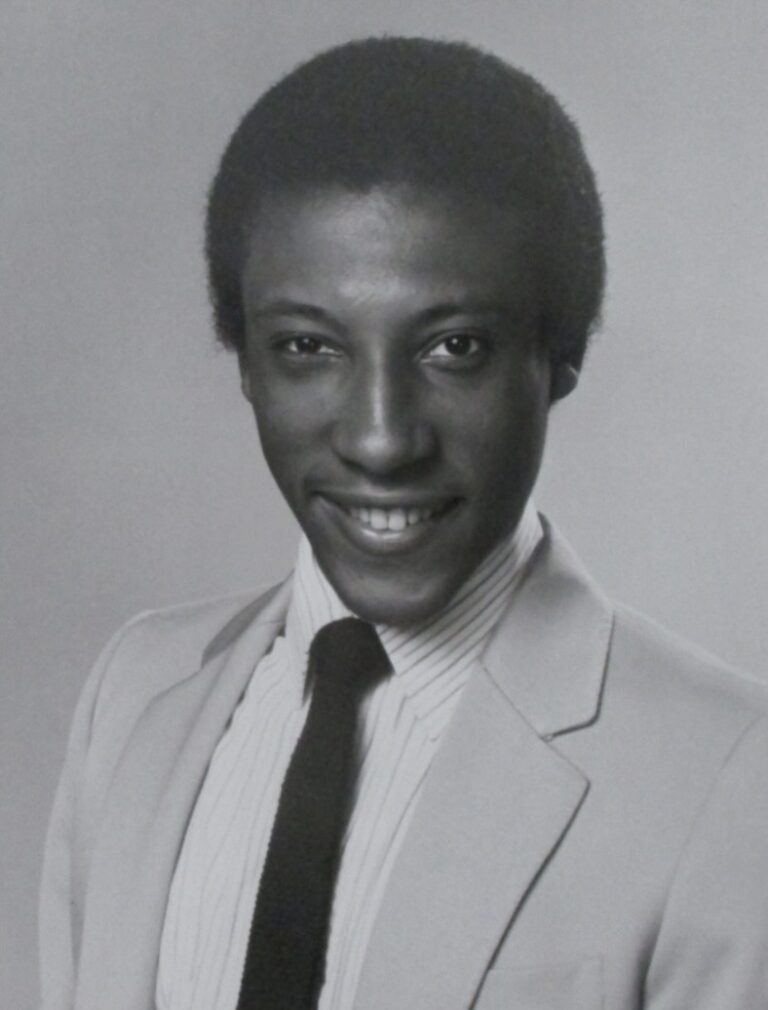
Byron Allen Net Worth

Byron Allen Net Worth

Byron Allen has publicly announced bids worth roughly $55 to $60 billion — for Paramount, for ABC, for BET, for an NFL team. None of them closed. Not one was ever accompanied by a named financing source.

Byron Allen Net Worth: Why We Publish No Figure

  • $1 billion — Celebrity Net Worth, with no method disclosed
  • Forbes does not list him. His Forbes profile page returns a 404, and Forbes published a long explainer about him in 2024 without giving a wealth figure at all
  • Our take: no verified figure. His company was downgraded to CCC with $928 million falling due in February 2027. See our methodology.

Two facts make a point estimate impossible rather than merely difficult. His main asset is a private company with no published balance sheet, currently selling its stations to repay debt. And his ownership percentage of that company has never been documented anywhere — every profile silently assumes 100 per cent.

Announced Bids Versus Completed Deals

This is the distinction that the aggregators collapse, and it is where the billions come from. A press release is not a transaction.

Announced, never completed

  • Paramount Global, January 2024 — $30 billion ($14.3 billion equity plus $15–16 billion of assumed debt). Financing described only as unnamed “strategic partners”. Paramount later went to Skydance
  • Paramount Global, 2023 — $18.5 billion. Rejected
  • ABC, FX and National Geographic, September 2023 — $10 billion. Described as preliminary and subject to change. Asked for a financing plan, he answered “Oh, absolutely” and gave no details
  • BET — $2.7 billion in early 2023, then $3.5 billion in December. Paramount halted the sale process entirely
  • Tegna, March 2020 — $8.5 billion. No deal
  • Denver Broncos, 2022. His actual bid was never published; the team sold to Rob Walton for $4.65 billion

CNBC put the record to him in 2024. He invoked Babe Ruth — “Do you know how many times he struck out?” CNBC did the arithmetic: Ruth struck out in about 15 per cent of his at-bats. Allen’s completion rate on billion-dollar media bids is zero.

Actually completed

  • The Weather Channel, March 2018 — about $300 million. The TV network only; the website and apps had gone to IBM in 2016
  • USA Television Holdings, February 2020 — $305 million for 11 stations. Announced at $290 million, closed at $305 million — a useful reminder that announcement prices and closing prices differ
  • Ten stations in seven markets, August 2021 — $380 million, plus WJRT-TV at $70 million and WCOV-TV at $28.5 million
  • Bayou City Broadcasting, July 2019 — $165 million for four stations
  • Black News Channel assets, July 2022 — $11 million out of bankruptcy. He was the only bidder, so the auction was cancelled

The Weather Channel purchase is the one worth understanding properly, because it was not bought with his own money. A credit rating action documents the financing: a first-lien term loan of $375 million, reduced from an initial $500 million, plus a $35 million dividend to management.

The $10.6 Billion Sports Deal He Did Not Buy

Allen Media Group’s own releases state that he “personally partnered” with Sinclair in August 2019 to acquire 21 regional sports networks “for $10.6 billion”. The figure appears in profile after profile as evidence of billionaire status.

Sinclair’s own filing tells a different story. It calls Allen an “equity and content partner in a newly formed indirect subsidiary” — with no percentage and no dollar amount. And the financing breakdown in that same document does not mention him at all: $1.4 billion of Sinclair cash, $1.0 billion of preferred equity from JPMorgan Chase Funding, and the remainder in debt. The operating agreement names him exactly once — as a carve-out from investment restrictions for a contemplated, unquantified investment.

Then the vehicle went bankrupt. Diamond Sports Group filed for Chapter 11 in March 2023 and emerged in January 2025 as Main Street Sports Group, its roughly $9 billion of pre-petition debt cut to about $200 million, with ownership passing to the funded-debt holders.

So the $10.6 billion was never his money and never his wealth. It is the enterprise value of a vehicle in which he held an undisclosed minority position — and that vehicle went through bankruptcy.

$40 Billion in Lawsuits, $0 in Documented Recoveries

He has sued Comcast, Charter, McDonald’s and DirecTV for sums totalling roughly $40 billion. Every case is over. Not one disclosed payment exists.

The most important one he lost. In March 2020 the US Supreme Court ruled unanimously against his side on the legal question, holding that a plaintiff under the relevant civil rights statute must plead but-for causation. The opinion describes the case only as “seeking billions in damages” — the $20 billion figure appears nowhere in it.

The settlements that followed — Comcast in June 2020, Charter in February 2021 and McDonald’s in June 2025, weeks before trial — all had undisclosed financial terms. In each case the known consideration was a carriage or advertising agreement, not damages.

The Debt: What Actually Constrains Him

In June 2025 Allen Media Group hired Moelis & Co. to sell all 28 of its owned stations in 21 markets, explicitly to reduce debt, after having invested by its own account “more than $1 billion” in acquiring them.

The stations in ten markets went to Gray Media for $171 million, closing in two tranches in March and May 2026. More than a billion invested, $171 million realised for ten markets: this is a forced sale, not a successful exit. Eighteen stations remain unsold.

The credit picture behind it: the term loan traded at roughly 65 cents on the dollar by September 2024, down from 88 cents in May; S&P called the capital structure unsustainable; CNBC reported the company was repeatedly up to 90 days behind in payments to networks, involving tens of millions of dollars. In February 2026 S&P cut Allen Media to ‘CCC’ with a negative outlook — $928 million to refinance by February 2027, against roughly $51.5 million of cash in late 2025. A negative outlook at that level means default or a distressed exchange is possible within twelve months.

One correction to the record: only S&P rates Allen Media publicly. There is no Moody’s rating, contrary to what several profiles imply.

The New Part: He Is Now an SEC Filer

Until 2026 there was no regulatory window into his personal holdings at all — Allen Media has no securities registration, and an EDGAR company search for it returns no matching companies. That changed this year, and it is the only hard evidence of personal net positions that exists.

  • Starz, March 2026: 1,803,786 shares for $25 million at $13.86 each, about 10.7 per cent. Funded, in the filing’s words, “through capital contributions of its member” — equity, not debt
  • BuzzFeed, May 2026: 40,000,000 shares at $3.00, or $120 million — but only $20 million in cash, with $100 million as a five-year secured promissory note at 5 per cent, due May 2031, secured on 33.33 million of the shares purchased. He became CEO and chairman
  • BuzzFeed, June 2026: a further 4,000,000 shares at $1.44, taking him to 44,000,000 shares and 53.0 per cent

At the close on 29 July 2026 those holdings were worth roughly $99.5 million — about $52.4 million of BuzzFeed and $47.1 million of Starz. Against that stands the $100 million note. Total cash actually deployed across both positions: about $50.8 million. The BuzzFeed stake is roughly 80 per cent debt-financed, the debt is owed to the company he bought, and at $1.19 the shares sit some 58 per cent below his $3.00 entry price — below the face value of the note itself.

The Bottom Line

Every billion-dollar number attached to him is a transaction volume or a legal claim, never equity: $10.6 billion of enterprise value, $30 billion of bid, $10 billion of bid, $20 billion of damages sought. None was his.

What is documented adds to the mid hundreds of millions gross, against real liabilities. Roughly $99.5 million of listed holdings, encumbered by $100 million of debt. Around $240 million of property purchase prices, against at least $82 million of recorded Beverly Hills financing. Realised property gains of about $40 million. And an operating company rated CCC whose equity value, after debt, is plausibly near zero — and in any case not honestly quantifiable, since his stake in it has never been disclosed.

Sources

Money Timeline

DateTypeEventAmountDetails
2018-03-22DealBuys The Weather Channel for about $300 million - with borrowed money$300MThe TV network only, from Blackstone, Bain Capital and Comcast; the website and apps had gone to IBM in 2016. No party ever officially confirmed the price. What is documented is the funding: a credit rating action records a first-lien term loan of $375 million, cut from an initial $500 million, plus a $35 million dividend to management. The purchase was leveraged, not made from his own capital. source
2019-08-23DealThe $10.6 billion sports deal that was never his moneyHis company's own releases say he personally partnered with Sinclair to acquire 21 regional sports networks for $10.6 billion. Sinclair's filing calls him an equity and content partner in a newly formed indirect subsidiary - with no percentage and no dollar amount - and the financing breakdown in the same document does not mention him at all. The operating agreement names him once, as a carve-out for a contemplated unquantified investment. The vehicle, Diamond Sports Group, filed for Chapter 11 in March 2023 and emerged in January 2025 with ownership passing to its debt holders. No amount is carried because none was ever disclosed. source
2020-02-11DealAnnounced at $290 million, closed at $305 million$305MEleven television stations in nine markets, with ABC, CBS, NBC and Fox affiliations, from USA Television Holdings. The announcement in October 2019 named $290 million; the closing release names $305 million. A useful illustration for anyone reading his bid announcements: the number in the press release is not the number in the contract. source
2020-03-23LawsuitSupreme Court rules against him - unanimouslyThe discrimination claim against Comcast, which circulated as a $20 billion action, reached the US Supreme Court. The Court held unanimously that a plaintiff under the relevant civil rights statute must plead but-for causation, vacating the appeals court ruling. The opinion describes the case only as seeking billions in damages - the $20 billion figure appears nowhere in it. He settled with Comcast in June 2020 on undisclosed terms, the known consideration being a carriage agreement rather than damages. source
2022-10-10Deal$100 million for a Malibu estate$100MA 3.6-acre clifftop property at Paradise Cove, about 10,698 square feet, bought from a Public Storage heir who had asked $127.5 million. His largest documented single purchase. Whether it carries a mortgage is not disclosed - unlike his Beverly Hills holdings, where at least $82 million of financing is on record. source
2024-01-31DealThe $30 billion Paramount bid - financing never named$30BStructured as $14.3 billion of equity plus $15 to 16 billion of assumed debt. His company described the funding only as unnamed strategic partners. He told CNBC there was more than enough capital available and that the real challenge was certainty of close. It did not close; Paramount later went to Skydance. This entry records an announced bid, not a transaction - his completion rate on billion-dollar media bids is zero, across Tegna, BET twice, ABC and Paramount twice. source
2026-02-20DealDowngraded to CCC - $928 million due within a year$928MS&P cut Allen Media to CCC with a negative outlook. To refinance by February 2027: $823 million of term loan plus $104.5 million of senior notes, against roughly $51.5 million of cash in late 2025. A negative outlook at this level signals possible default or distressed exchange within twelve months. Earlier markers: the loan traded near 65 cents on the dollar by September 2024, S&P called the capital structure unsustainable, and CNBC reported arrears to networks of up to 90 days. Note that only S&P rates the company publicly - there is no Moody's rating. source
2026-03-06DealFirst documented personal stake: $25 million of Starz$25M1,803,786 shares at $13.86, about 10.7 per cent, bought through a family investment vehicle. The filing states the money came through capital contributions of its member - equity rather than debt. This is the point at which he becomes an SEC reporting person for the first time, and therefore the only hard evidence of his personal net positions that has ever existed. Until 2026 his main company had no securities registration at all. source
2026-05-01DealSells ten markets for $171 million after investing over $1 billion$171MAllen Media hired Moelis and Co. in June 2025 to sell all 28 stations in 21 markets, explicitly to reduce debt, having invested by its own account more than $1 billion in acquiring them. The Gray Media agreement of August 2025 covered ten markets and closed in two tranches in March and May 2026. Eighteen stations remain unsold. This is a forced sale rather than a realisation of value. source
2026-05-26DealTakes control of BuzzFeed - 80 per cent of it on credit$120M40,000,000 shares at $3.00, of which only $20 million was cash at closing; the remaining $100 million is a five-year secured note at 5 per cent due May 2031, collateralised by 33.33 million of the shares purchased - debt owed to the company he bought. He became CEO and chairman. A June top-up of 4,000,000 shares at $1.44 took him to 44,000,000 shares and 53.0 per cent. At the close on 29 July 2026 the stake was worth about $52.4 million at $1.19 a share - some 58 per cent below his entry price, and below the face value of the note. source

Key financial events, aggregated from the sources cited above. See our methodology.

Frequently Asked Questions

Short answers to the most common questions about this profile. For our sourcing and update method, see our Methodology page.

Is Byron Allen a billionaire?

Not verifiably. He does not appear on the Forbes billionaires list - his Forbes profile page returns a 404 - and Forbes published a long explainer about him in 2024 without giving any wealth figure. The $1 billion that circulates comes from Celebrity Net Worth with no method disclosed. His only officially documented holdings are stakes in Starz and BuzzFeed, worth roughly $99.5 million combined at the close on 29 July 2026, of which $100 million is financed by a promissory note. Meanwhile his private company was downgraded to CCC in February 2026 with $928 million falling due in February 2027.

Did Byron Allen actually buy Paramount or ABC?

No. He announced bids: $10 billion for ABC, FX and National Geographic in September 2023, and $30 billion for Paramount Global in January 2024, comprising $14.3 billion of equity plus assumed debt. Neither was ever accompanied by a named financing source - his company referred only to unnamed strategic partners, and the ABC offer was described as preliminary. Paramount later went to Skydance. CNBC documented that none of his major media bids has ever resulted in a purchase, putting his completion rate on billion-dollar bids at zero.

Was Byron Allen part of a $10.6 billion sports network deal?

He was a partner in it, but the figure was never his money. Sinclair's own filing calls him an equity and content partner in a newly formed indirect subsidiary, with no percentage and no dollar amount given, and the financing breakdown in that same document does not mention him at all. The operating agreement names him exactly once, as a carve-out for a contemplated unquantified investment. The vehicle, Diamond Sports Group, then filed for Chapter 11 in March 2023 and emerged in January 2025 with ownership passing to its funded-debt holders. Counting $10.6 billion of enterprise value as personal wealth is the classic error of using company value instead of equity after debt.

How much did Byron Allen win from his lawsuits against Comcast, Charter and McDonald's?

No publicly known amount, in any of them. He sued for roughly $40 billion in total. The most significant case he lost: in March 2020 the US Supreme Court ruled unanimously against his side on the legal question of causation. The settlements with Comcast in June 2020, Charter in February 2021 and McDonald's in June 2025 all had undisclosed financial terms, and in each case the known consideration was a carriage or advertising agreement rather than damages. A claim is not a receipt.

Why is Byron Allen selling his television stations?

To repay debt. Allen Media Group hired Moelis and Co. in June 2025 to sell all 28 stations in 21 markets, after investing by its own account more than $1 billion in acquiring them. The stations in ten markets went to Gray Media for $171 million, closing in March and May 2026; eighteen remain unsold. The background is a credit squeeze: the term loan traded around 65 cents on the dollar by September 2024, S and P called the capital structure unsustainable, CNBC reported payment arrears to networks of up to 90 days, and in February 2026 S and P cut the company to CCC with a negative outlook - $928 million due by February 2027 against roughly $51.5 million of cash.

More comedy profiles like this

Browse a curated selection of other comedy profiles. Net-worth figures load when available; otherwise see the individual profile.

Scroll to Top