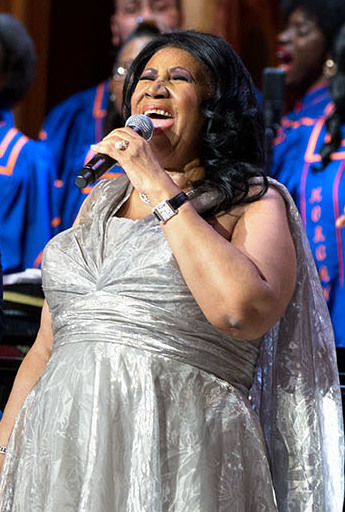
Aretha Franklin Net Worth

Aretha Franklin Net Worth

When Aretha Franklin’s estate was inventoried, her assets were pegged at $4.1 million — and her entire body of creative work was entered at a nominal $1.

That single placeholder is why every published figure for her wealth is unusable. It also explains why the estate has since paid out more than $8.1 million in tax.

And the part nobody is counting: 29 recorded notices are pulling her rights back from the record companies, on dates running to 2028.

Aretha Franklin Net Worth: Why We Publish No Figure

  • Estimates run $4.1m to $80m — a factor of 19.5, and every one mixes up inventory, claim, settlement and payment
  • The $80 million predates the tax bill entirely — it is a pre-2018 number still in circulation
  • Our take: no figure — the estate is still open and its value is rising by court-recorded schedule. See our methodology.

The Tax Bill: Claimed, Settled, Paid — Three Different Numbers

Most coverage collapses these into one. The record keeps them apart.

StageAmountDate
Claimed by the tax authority, for 2010–2017more than $7.8mpetition dated 19 Feb 2021
Immediate payment under the plan$800,0002021
To the four sons, split equally$200,0002021
Balance cleared by cashier’s cheque17 Jun 2022
Actually paid since 2020, per court filingsat least $8.1mreported 2023

The 2021 plan also set an ongoing split of quarterly receipts: 45% to the tax authority, 40% into escrow, 15% to administration, with distributions to the heirs triggered only once the combined accounts exceeded $1 million.

The balance was paid off on 17 June 2022.

Note the gap between $7.8m and $8.1m. The claim and the payment are not the same figure — accrued interest and penalties sit in between. Court filings put the total actually paid at $8.1 million or more.

This Was the Third Round, Not the First

The estate’s tax dispute is usually told as though it began at her death. It did not.

The US Tax Court’s public docket holds two petitions filed in her lifetime, both from Michigan with Detroit as the trial venue:

  • Docket 30780-86, filed 24 July 1986 — closed by stipulated decision on 4 June 1987
  • Docket 28075-92, filed 21 December 1992 — closed by stipulated decision on 3 December 1993

Both settled without trial. The amounts are not retrievable — these are legacy files with no electronic text. And one honest caveat: the docket gives a name and a state but no middle name, so Michigan plus Detroit makes the identification very likely rather than certain.

Searching the same system for the estate returns nothing, with a working control. That negative is informative: the $7.8 million dispute was never litigated in the Tax Court — it was settled in the probate court instead.

She Did Not Own Her Masters

The copyright register separates the author of a work from the claimant who owns it. Counting her registrations gives a stark answer:

Register classListed as authorListed as owner
Sound recordings (84 entries, all read)50×
Compositions (163 entries, 100 sampled)98×21×

On the recordings, companies hold ownership 81 times against 12 for individuals. On the compositions she is the most frequent individual owner, alongside her own publishing companies.

The songs were hers. The recordings belonged to the labels.

One methodological note we will not hide: the composition figures are a sample of 100 from 163, because the search interface caps results. The recording figures are complete. The contrast holds either way, but the composition numbers are indicative rather than exhaustive.

29 Notices, and a Calendar Running to 2028

This is the part that changes the arithmetic, and no estimate reflects it.

US copyright law lets authors and their heirs take back rights they signed away decades earlier, by serving and recording formal notice years in advance. Her estate and heirs have recorded 29 such notices between 2019 and June 2026:

RecordedAgainstTakes effect
9 May 2019Arista / Sony Music6 May 2021
23 Jul 2021Arista / Sony Music28 Jun 2023
12 Sep 2023Arista / Sony (1987 album)5 Sep 2025
15 Apr 2025Warner Chappell / Atlantic22 Mar 2027
28 Aug 2025Sony Music / Columbia11 Jun 2027
18 Jun 2026Warner Music / Atlantic5 May 2028

Each recorded date is a scheduled reversion of US rights in works from the 1960s onward. The register carries all of them with parties, service dates and effective dates.

No amount attaches to any of them — terminations transfer rights, not cash. But the direction is unambiguous, and it runs one way only: every recorded movement is a recovery, not a sale. There is no recordation anywhere showing the estate disposing of rights.

Nearly a Million Dollars in Cheques Nobody Cashed

The court inventory turned up uncashed cheques found after her death:

  • $702,711.90 from a performance-rights body and a writers’ guild
  • $285,944.27 to her publishing company from music publishers, rights societies and a film company
  • $988,656.17 in total

Both trade and general coverage carry the identical figures from the filing.

What the Estate Runs On

The administrator’s accounting to March 2023 showed $3.9 million of estate income over twelve months against roughly equal outgoings — including more than $900,000 in legal fees to various firms.

A jury decided on 11 July 2023 that a handwritten 2014 document was a valid will, deliberating under an hour after a two-day trial. In November 2023 the probate judge allocated real estate to the sons: one property valued at $1.1 million as of 2018 and now worth more, another already sold by the estate for $300,000 before the competing wills surfaced, and a further property to a third son.

Those are the only two amounts attributable to the heirs anywhere in the record — that, and the $50,000 each from 2021.

A Judgment Against Her, Recovered in Full Text

In 1990 a federal court in New York entered judgment against her and her production company for $209,364.07, with pre-judgment interest from June 1984 running on only $52,182.12 of it.

We flag this one because of how we got it. Three legal databases blocked us and the web archive held no copy. The text came from an open case-law archive, and the figure above is quoted from the court’s own operative order — not from a secondary summary.

The production company named as co-defendant reappears in the 2021 estate petition. It existed for more than 35 years.

The Estate Is Still Being Litigated

Searching federal dockets by her company name rather than her own turned up four cases, including a live one.

She twice went to court herself over a concert film, in 2011 and 2015. Since April 2026 the film’s production company has been litigating against her publishing company, seeking to compel arbitration. On 16 July 2026 the case was transferred to Michigan for want of jurisdiction. It is unresolved and carries no amount.

A related correction: the 2021 biographical film was optioned through a biographer’s book, recorded in January 2020 — not through rights held by the estate.

$4.1 Million or $80 Million — Both Wrong

The $80 million is a 2018 estimate, published in her death year. It predates the tax claim, the settlement and the $8.1 million actually paid. Every site still running it is quoting a figure the subsequent record has overtaken.

The $4.1 million is the court inventory — and by its own terms it excludes the most valuable thing she owned. Her creative work was entered at $1. Using that total as a net worth means valuing her catalogue at one dollar.

The $10 million published by one aggregator collapses on its own page: it concedes that intellectual property, catalogue and royalties are excluded, then estimates the real number at “$50–80 million”. A page that contradicts its own headline is not a source.

One thing we checked and did not find: no source divides the estate by four and presents the result as each son’s wealth. That error, common elsewhere, does not appear here.

Why No Number Can Be Right Yet

Three reasons, each sufficient on its own.

The only court-adjacent figure measures the wrong thing. An inventory carrying her catalogue at $1 is a legal formality, not a valuation.

The estate is open and moving. A federal case has been running since July 2026, and rights keep reverting on a recorded schedule through 2028. Any figure would be stale on publication.

An estate is not the heirs’ wealth. Probate establishes what the estate holds, not what anyone personally owns.

One gap we could not close: the Oakland County land records are unreachable from our network — the state portal redirects there and the connection is filtered. Tax liens against her personally are therefore inconclusive, not absent. We say so rather than reporting a clean negative we did not earn.

What we can offer instead is a documented chain running from 1986 to 2028, with docket numbers, recordation identifiers and dates — and the plain finding that her estate is scheduled to become more valuable, not less.

Money Timeline

DateTypeEventAmountDetails
1987-06-04SettlementThe first tax case, settled without trialA petition filed on 24 July 1986 closed by stipulated decision on this date, with Detroit as the trial venue. A second petition followed on 21 December 1992 and closed the same way on 3 December 1993. Both settled without a hearing and the amounts are not retrievable, since these are legacy files with no electronic text. The point is the pattern: the estate's dispute with the tax authority after 2018 was the third documented round, not the first. One honest caveat, the docket gives a name and a state but no middle name, so Michigan plus Detroit makes the identification very likely rather than certain. source
1990-04-26Lawsuit$209,364.07 against her, recovered from the court's own order$209KA federal court in New York entered judgment against her and her production company, with pre-judgment interest from June 1984 running on only $52,182.12 of the total. Worth noting how this figure was obtained: three legal databases blocked us and the web archive held no copy, so the text came from an open case-law archive and the amount is quoted from the operative order rather than from a secondary summary. The production company named as co-defendant reappears in the 2021 estate petition, meaning it existed for more than 35 years. source
2019-08-15Deal$988,656.17 in cheques nobody had cashed$989KThe court inventory turned up uncashed cheques found after her death: $702,711.90 from a performance-rights body and a writers' guild, and $285,944.27 payable to her publishing company from music publishers, rights societies and a film company. The same inventory pegged total assets at $4.1 million, mostly cash and real estate, while entering her creative works and intellectual property at a nominal $1. That single placeholder is why the inventory total cannot be read as a net worth. source
2021-02-19Settlement$7.8 million claimed, $800,000 down$7.8MA petition set out a plan to resolve a tax claim of more than this sum covering 2010 to 2017: $800,000 paid immediately, $200,000 distributed equally among her four sons, and an ongoing split of quarterly receipts of 45 per cent to the tax authority, 40 per cent to escrow and 15 per cent to administration, with distributions to the heirs triggered only once the combined accounts exceeded $1 million. The claim figure and the payment figure are not the same: court filings later put the total actually paid since 2020 at at least $8.1 million, the difference being accrued interest and penalties. source
2022-06-17SettlementThe balance cleared by cashier's chequeThe remaining tax liability was paid off on this date, according to a petition filed by the estate's personal representative. No amount is booked here because the closing payment itself is not separately quantified in the filing; the cumulative figure of at least $8.1 million appears in later court filings. Every published estimate of her wealth dated before this point is describing a position the record has since overtaken. source
2023-11-27Deal$1.1 million and $300,000 - the only sums the heirs can point to$1.1MAfter a jury decided on 11 July 2023 that a handwritten 2014 document was a valid will, deliberating under an hour, the probate judge allocated real estate to the sons in November. One property was valued at this sum as of 2018 and is now worth more; another had already been sold by the estate for $300,000 before the competing wills surfaced; a third son received a further property. Together with the $50,000 each from 2021, these are the only amounts attributable to the heirs anywhere in the record. The administrator's accounting to March 2023 showed $3.9 million of estate income over twelve months against roughly equal outgoings, including more than $900,000 in legal fees. source
2026-06-18Deal29 notices pulling her rights back, out to 2028US copyright law lets authors and their heirs reclaim rights signed away decades earlier by recording formal notice years in advance. Her estate and heirs have recorded 29 such notices since 2019, against Sony, Arista, Columbia, Warner Music, Warner Chappell and Atlantic, with effective dates including 22 March 2027, 11 June 2027 and 5 May 2028. This latest one is the furthest out. No amount attaches, since terminations move rights rather than cash, but the direction runs one way: every recorded movement is a recovery, and no recordation anywhere shows the estate selling rights. It is also the reason her catalogue was worth reclaiming - across 84 sound recording registrations she is listed as author 50 times and as owner just once. source
2026-08-05Deal$4.1 million or $80 million - and a catalogue booked at $1Estimates span a factor of 19.5 and every one confuses inventory, claim, settlement and payment. The $80 million is a 2018 estimate published in her death year, predating the tax claim and the more than $8.1 million since paid. The $4.1 million is the court inventory, which by its own terms values her creative work at a nominal $1. A third figure of $10 million concedes on the same page that catalogue and royalties are excluded, then estimates the real number at $50 to $80 million. One error we checked for and did not find: no source divides the estate by four and presents the result as each son's wealth. Meanwhile a federal case over a concert film has been running against her publishing company since April 2026, transferred to Michigan on 16 July 2026 and still unresolved. source

Key financial events, aggregated from the sources cited above. See our methodology.

Frequently Asked Questions

Short answers to the most common questions about this profile. For our sourcing and update method, see our Methodology page.

How much was Aretha Franklin's estate worth?

No reliable figure exists, and the one court-adjacent number measures the wrong thing. The inventory pegged her assets at $4.1 million, mostly cash and real estate, but entered her creative works and intellectual property at a nominal $1. Using that total as a net worth means valuing her catalogue at one dollar. The $80 million that still circulates is a 2018 estimate published in her death year, before the tax claim, the settlement and the more than $8.1 million the estate has since actually paid. A third figure of $10 million collapses on its own page, conceding that catalogue and royalties are excluded and then estimating the real number at $50 to $80 million.

How much tax did the estate owe, and was it paid?

The claim was for more than $7.8 million covering the years 2010 to 2017. A petition dated 19 February 2021 set out a plan of $800,000 paid immediately, $200,000 distributed equally among her four sons, and an ongoing split of quarterly receipts of 45 per cent to the tax authority, 40 per cent to escrow and 15 per cent to administration. The remaining liability was cleared by cashier's cheque on 17 June 2022. Note that claim and payment are different numbers: court filings put the total actually paid since 2020 at at least $8.1 million, the difference being accrued interest and penalties.

Did she have tax disputes before she died?

Yes, twice. The US Tax Court's public docket holds two petitions filed in her lifetime, both from Michigan with Detroit as the trial venue: docket 30780-86, filed 24 July 1986 and closed by stipulated decision on 4 June 1987, and docket 28075-92, filed 21 December 1992 and closed by stipulated decision on 3 December 1993. Both settled without trial and the amounts are not retrievable, as these are legacy files with no electronic text. One caveat: the docket gives a name and a state but no middle name, so the identification is very likely rather than certain. Searching the same system for the estate returns nothing, which confirms the later dispute was settled in probate rather than litigated there.

Did Aretha Franklin own her master recordings?

No. Across 84 sound recording registrations, all of which we read, she is listed as author 50 times but as owner only once; companies hold ownership 81 times against 12 for individuals. The composition side inverts: across a sample of 100 of 163 entries she is author 98 times and owner 21 times, making her the most frequent individual owner, alongside her own publishing companies. The songs were hers and the recordings belonged to the labels. The composition figures are a sample because the search interface caps results, while the recording figures are complete.

Why is the estate expected to become more valuable?

Because US copyright law lets authors and their heirs reclaim rights they signed away decades earlier, by serving and recording formal notice years in advance. Her estate and heirs have recorded 29 such notices between 2019 and June 2026, against Sony, Arista, Columbia, Warner Music, Warner Chappell and Atlantic, with recorded effective dates running to 5 May 2028. Each of those dates is a scheduled reversion of US rights. No amount attaches to any of them, since terminations transfer rights rather than cash, but the direction runs one way only: every recorded movement is a recovery, and there is no recordation anywhere showing the estate selling rights.

More music profiles like this

Browse a curated selection of other music profiles. Net-worth figures load when available; otherwise see the individual profile.

Scroll to Top