Net worth & personal profile
Lil DurkNet Worth
The $8M estimate tested against sealed court finances, a $4.5M cash bond proposal, catalog income, two No. 1 albums, the unconfirmed $40M claim and his September 2026 acquittal.
Lil Durk’s current net worth is not independently established. Celebrity Net Worth publishes $8 million, but a federal judge who reviewed sealed financial reports wrote that proposed funds were only a fraction of his net worth and that his intellectual property could continue producing a handsome living. The court did not state a dollar total. A $4.5 million cash bond proposal, chart success and label support establish substantial resources and earning power, but they do not reveal assets minus liabilities.
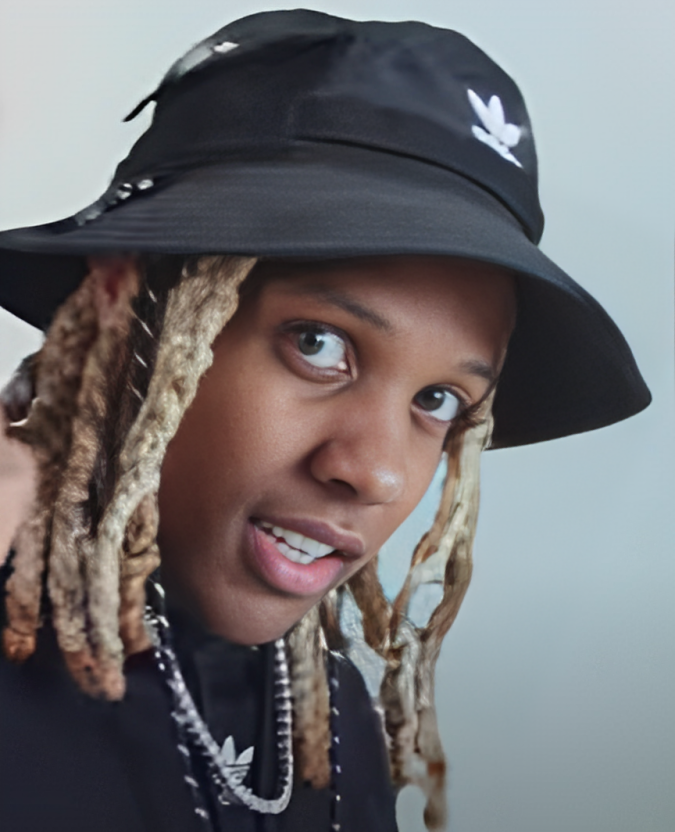
Source · CC BY 3.0 · Displayed crop
The essentials
A federal judge with access to sealed Pretrial Services reports wrote that the proposed funds were “only a fraction” of Banks’s net worth, but supplied no figure. [1]
A defense filing offered $4.5 million in cash—$3 million from Banks, $1 million from Alamo and $500,000 from an associate—plus $700,000 equity in his mother’s home. [2]
The widely repeated $40 million contract originated with Banks’s own post; XXL sought label confirmation and did not receive it. [10]
The estimate · Court finance · Music · Deals & OTF · Personal & current · Evidence
Lil Durk rose from Chicago’s early-2010s drill scene to two Billboard 200 No. 1 albums and a Grammy. His public success is substantial. His private balance sheet is not public, and the strongest financial evidence now comes from an unusual source: a federal court that reviewed sealed financial reports.
This review applies the Net Worth VIP methodology. It separates an outside $8 million estimate, a proposed bond package, artist-contract claims, a label acquisition and individual royalty slices instead of adding them together as personal wealth.
01 / The estimate
The court supplies a strong clue, but still no auditable number
Celebrity Net Worth publishes $8 million. The page summarizes Banks’s career, yet it does not show a dated list of cash, investments, real estate, catalog interests, contract obligations, legal costs, taxes and debt. The total cannot be independently reproduced.
The June 2025 detention ruling is more probative. After reviewing sealed Pretrial Services reports, the judge wrote that the proffered funds were “only a fraction” of Banks’s net worth. The order also said his intellectual property could let him earn a “handsome living” abroad. That is an informed direction, not a disclosed valuation.
The sealed reports prevent readers from knowing what the court counted, how assets were valued or which liabilities were deducted. We therefore leave the structured net-worth field blank rather than converting judicial language into a made-up total.
02 / Court finance
A $5.2M package demonstrates liquidity and backing—not net worth
A May 2025 defense filing proposed $4.5 million in cash: $3 million from Banks, $1 million from Alamo Records and $500,000 from a business associate. It added $700,000 of equity in the Georgia home where his mother lives. Because this was a defense proposal, its claims are attributed to the filing rather than treated as an audited court finding.
The later court order specifically discussed the $1 million from Alamo/Sony and the sealed financial reports. Label support of that size signals commercial importance, while money pledged for bail remains security—not income, a gift or proof of a specific fortune.
On September 11, 2026, a jury acquitted Banks on all five counts tried. He remains in custody pending a separate severed racketeering count; AP reports that he has not been released, and a bond review is reported for November 4. He has pleaded not guilty to the unresolved charge and is presumed innocent.
03 / Music economics
No. 1 albums and a Grammy prove demand; royalty splits decide the money
The Voice of the Heroes with Lil Baby became Banks’s first Billboard 200 No. 1 in 2021, followed by the solo album 7220 in 2022. All My Life featuring J. Cole won the 2024 Grammy for Best Melodic Rap Performance. Deep Thoughts then debuted at No. 3 in April 2025.
Chart units combine streams, track equivalents and album sales. Gross platform and label revenue still passes through recording terms, recoupment, producer points, featured-artist splits, publishing shares, management and tax before becoming retained personal wealth.
One SEC-filed fractional-rights offering gives scale without solving the whole puzzle: a writer’s performance-rights share in one four-times-platinum Lil Durk song produced $28,967.66 across three quarters. The filing does not identify Banks as that rights holder and covers only one rights slice, so it is context rather than his income statement.
04 / Deals and ownership
The $125M label sale and $40M contract claim require separate labels
Music Business Worldwide reported that Sony bought a majority stake in Alamo Records for about $125 million. Banks was an Alamo artist; the reported figure was consideration for control of the company. It was not his record-deal payment and does not establish his share of the transaction.
The $40 million figure came from Banks himself in a 2022 social-media post. XXL reported the claim, asked Alamo for comment and received no confirmation. Even a verified contract value would normally represent gross commitments across a term, not cash retained after advances, recoupment, delivery requirements, costs and tax.
Banks also founded Only the Family. Founder status can create value through recordings, artist services, branding and catalog rights, but public sources do not provide a current ownership table, audited revenue, profit, debt or valuation. OTF therefore belongs in the income-source map, not as an invented asset value.
05 / Personal and current
India, the children and Deep Thoughts belong in the current profile
The 2025 court order identifies India Cox Banks as his wife. It says they share a daughter and stepdaughter and that he maintains relationships with seven other children. This is more reliable than older entertainment profiles that describe India only as a girlfriend or list a lower child count.
Apple Music records Deep Thoughts as a 20-track Alamo/Sony release dated March 28, 2025. Its No. 3 chart debut shows the catalog and release pipeline remained commercially active after his October 2024 detention, but neither chart rank nor streaming volume reveals his contractual share.
The profile will need another legal-status review after the November 4 bond hearing or any new trial date. Until then, the accurate formulation is narrow: acquitted on all five counts in the first trial, still detained on a separate unresolved count, and presumed innocent of that pending charge.
The evidence, with its limits
| Figure or fact | What it establishes | What it does not establish |
|---|---|---|
| $8M | Published outside estimate | Audited current net worth |
| $4.5M cash + $700K equity | Defense bond proposal and identified backers | Personal wealth of $5.2M or court-approved valuation |
| “Only a fraction” | Judge’s reading of sealed financial reports | A precise lower bound or total |
| $40M | Banks’s own contract claim | Label-confirmed pay or retained cash |
| About $125M | Reported Sony majority purchase of Alamo | Payment to Banks |
| $28,967.66 / 3 quarters | One writer-share royalty example | Banks’s catalog or total royalty income |
| No. 3 | Deep Thoughts Billboard 200 debut | Profit or artist royalty rate |
| Not guilty on 5 counts | September 2026 jury verdict | Resolution of the separate pending count |
Financial record
The money timeline
Acquitted on all five tried countsLegalNot disclosedDetails & source
Amount and context
Not disclosed · USD
Banks was acquitted in the first trial and remained detained pending the severed case.
Open source for Acquitted on all five tried counts ↗$5.2M enhanced bond package proposedLegal$5.2MDetails & source
Amount and context
$5,200,000 · USD
The defense filing proposed $4.5 million cash plus $700,000 equity.
Open source for $5.2M enhanced bond package proposed ↗First Grammy winAwardNot disclosedDetails & source
Amount and context
Not disclosed · USD
All My Life featuring J. Cole won Best Melodic Rap Performance.
Open source for First Grammy win ↗$40M contract claim remains unconfirmedDeal$40MDetails & source
Amount and context
$40,000,000 · USD
Banks posted the figure; XXL said the label did not confirm it.
Open source for $40M contract claim remains unconfirmed ↗First Billboard 200 No. 1CareerNot disclosedDetails & source
Amount and context
Not disclosed · USD
The Voice of the Heroes with Lil Baby became Banks’s first No. 1 album.
Open source for First Billboard 200 No. 1 ↗Amounts describe different financial measures and retain their original currencies. They must not be added together as personal wealth. Our methodology.
Common questions
Questions, answered
What is Lil Durk’s net worth in 2026?
It is not independently established. Celebrity Net Worth publishes $8 million, while a federal judge who reviewed sealed financial reports said proposed funds were only a fraction of his net worth. Because the court did not state a total and the underlying reports remain sealed, neither source produces an auditable current figure.
Did Lil Durk offer $5.2 million for bail?
A May 2025 defense filing proposed $4.5 million in cash plus $700,000 equity in his mother’s home. The filing said $3 million would come from Banks, $1 million from Alamo Records and $500,000 from a business associate. A bond proposal identifies security and backing; it is not the same as net worth.
Does Lil Durk have a $40 million record deal?
The figure comes from a 2022 post by Banks. XXL reported that Alamo did not confirm it. Contract value would also be gross over a term and subject to advances, recoupment, costs, delivery terms, representation and tax, so it would not equal personal wealth.
Who is Lil Durk’s current partner and how many children does he have?
A June 2025 federal court order identifies India Cox Banks as his wife. It says they share a daughter and stepdaughter and that he maintains relationships with seven other children. That court wording is used because older public profiles conflict on the total.
Was Lil Durk convicted in the 2026 trial?
No. A federal jury acquitted him on all five counts tried on September 11, 2026. He remains detained because a separate severed racketeering count is unresolved. He has pleaded not guilty to that charge and is presumed innocent.
Follow the evidenceSources & reading17 links
- U.S. District Court — detention ruling ↗
The June 9, 2025 order relies on sealed Pretrial Services reports, calls the proposed funds only a fraction of Banks’s net worth, identifies intellectual property as continuing earning capacity, and records his wife and children.
- U.S. District Court filing — enhanced bond proposal ↗
Defense filing proposes $4.5 million cash, including $3 million from Banks and $1 million from Alamo, plus $700,000 equity in his mother’s home. A filing is a party’s position, not a court finding.
- Associated Press — Lil Durk acquitted on all five tried counts ↗
Reports the September 11, 2026 acquittal and continued custody pending a separate, severed racketeering count.
- Complex — bond review hearing set ↗
Reports a November 4, 2026 bond review after the acquittal; the remaining trial schedule may change.
- Recording Academy — 2024 Grammy winners ↗
Official winners list records All My Life featuring J. Cole as Best Melodic Rap Performance.
- Sony Music — Lil Durk biography ↗
Label biography traces the early OTF mixtapes and the No. 1 collaborative album The Voice of the Heroes.
- Billboard — Deep Thoughts chart ↗
Official Billboard 200 page records Deep Thoughts debuting at No. 3.
- Apple Music — Deep Thoughts ↗
Official release page identifies the March 28, 2025 album, its 20 tracks and Alamo/Sony copyright.
- Music Business Worldwide — Sony buys majority of Alamo ↗
Reports Sony’s acquisition of a majority stake in Alamo at an estimated $125 million; that is a company transaction, not Banks’s artist contract.
- XXL — Lil Durk claims a $40M contract ↗
Documents Banks’s own social-media claim and says the label did not confirm it.
- SEC filing — fractional royalty offering ↗
Regulation A filing shows $28,967.66 across three quarters for a writer’s performance-rights share in one four-times-platinum Lil Durk song; the rights holder is not identified as Banks.
- Celebrity Net Worth — Lil Durk ↗
Publishes an $8 million estimate, while its stated method does not provide a dated personal balance sheet or reproducible calculation.
- Wikimedia Commons — Lil Durk in 2022 ↗
Portrait derived from a JD Sports video and licensed CC BY 3.0.
- Net Worth VIP — Drake ↗
A streaming-era artist comparison separating headline contracts, catalog economics and personal wealth.
- Net Worth VIP — Young Thug ↗
A rapper comparison where court records and music income require careful boundaries.
- Net Worth VIP — Chief Keef ↗
A Chicago drill comparison with label, catalog and private-wealth uncertainty.
- Net Worth VIP — methodology ↗
How the site treats outside estimates, contracts, royalties, company transactions and court records.