Net worth & personal profile
Jeremy ClarksonNet Worth
A register-led look at the disputed $80M estimate, £6.01M liquidation share, Top Gear rights, farm businesses, Lisa Hogan, three children and his current shows.
Jeremy Clarkson’s current net worth is not publicly verifiable. Celebrity Net Worth publishes $80 million, while British press has long repeated £30 million; neither provides a current asset-and-liability schedule. Companies House does document major pieces: about £10.1 million of Top Gear dividends from 2009–2013 and approximately £6.01 million from the solvent liquidation of his quarter-owned Grand Tour production company. Those historic gross receipts cannot be turned into present wealth without taxes, spending, property values, private holdings and debts.
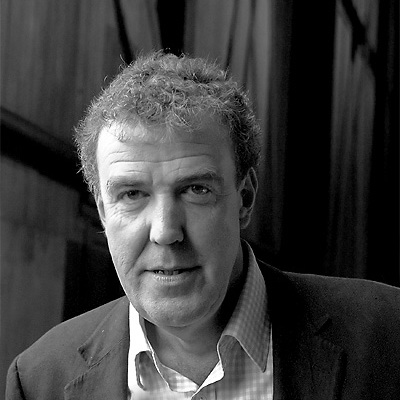
Source · Creative Commons Attribution-ShareAlike 2.0 Generic · Displayed crop
The essentials
No defensible current net-worth total is public. The visible $80 million and £30 million estimates disagree in currency and scale and neither discloses a reproducible balance sheet. [21]
The strongest recent personal cash evidence is about £6.01 million: one quarter of £24,053,865 distributed from the solvent winding-up of W. Chump & Sons. [5]
Filed Bedder 6 accounts support roughly £10.1 million of Top Gear dividends across five years, plus about £1.7 million in service fees. They do not reveal the later stake-sale price. [7]
Jeremy Clarkson’s money story is better documented than most celebrity profiles because two important production businesses filed British accounts. Those records show ownership, dividends, director pay and liquidation distributions. They still do not show the farm’s private land value, household spending, taxes, investments or every debt.
The revised profile therefore leaves the headline value open and makes the verified cash events more prominent than the unsupported total. Celebrity Net Worth publishes $80 million; the Evening Standard repeated £30 million in 2019. Neither supplies a current balance sheet. Company turnover, company net assets and gross programme deals are not personal wealth. Celebrity Net Worth — Jeremy Clarkson · Evening Standard — reported £30 million estimate · Net Worth VIP — methodology
01 / The breakthrough
Top Gear created fame — ownership created the unusual payday
Clarkson first presented Top Gear in 1988 and became the defining host of its high-budget 2002 relaunch alongside Richard Hammond and James May. The format’s global sales, DVDs, live shows and merchandise mattered financially because he was also an owner in Bedder 6, the commercial-rights joint venture. Prime Video — The Grand Tour final episode
The shareholder return shows 3,000 of 10,001 dividend-bearing shares, about 29.997 per cent. Filed accounts support approximately £10.1 million of dividends to Clarkson from 2009 through 2013 and around £1.7 million of service fees. The £2,708,200 computed dividend for the year to March 2012 independently matches the BBC’s reported £2.7 million. Bedder 6 — shareholder return · BBC News — £2.7 million Top Gear dividend
His shares transferred in September 2012, but the register states no consideration. Parliament’s published correspondence confirms a put option at market value and a negotiated settlement, not a number. The £10–15 million range appears in the committee’s question as a press report, and cannot be upgraded into a BBC-confirmed sale price. UK Parliament — BBC Worldwide written evidence
02 / Personal life
Lisa Hogan, three children and a blended family
The Guardian’s direct farm interview identifies Lisa Hogan as Clarkson’s long-term partner and says his three grown children are from his second marriage to Frances Cain. Their names are Emily, Finlo and Katya. Hogan also has three children, creating a six-child blended family when they are together. The Guardian — Jeremy Clarkson interview
Clarkson told the same interviewer he did not plan to marry again. Hogan described a 50/50 profit arrangement on Diddly Squat merchandise in addition to her television appearance fees. That confirms her own economic role; it does not disclose sales, profit, either partner’s taxable income or rights in the land. The Guardian — Jeremy Clarkson interview
In June 2026 Clarkson publicly said an aggressive but early-detected prostate cancer was in remission and that he would continue regular monitoring. The disclosure followed series 5, while production of series 6 was underway. This is a dated health update from Clarkson, not a medical prognosis. The Guardian — prostate cancer in remission
03 / The best money evidence
A £6.01 million distribution, not a £137 million personal deal
W. Chump & Sons, the production company behind The Grand Tour, entered a solvent members’ voluntary liquidation in July 2024. The declaration listed £24,087,581 of assets, including £22,906,077 in cash, against £33,012 of liabilities. The liquidator later recorded £24,053,865 distributed through April 2025. W. Chump & Sons — declaration of solvency · W. Chump & Sons — liquidator statement
A filed shareholder list gives Clarkson, Hammond, May and Andy Wilman 10,000 of 40,000 shares each. Clarkson’s quarter of the recorded distributions is approximately £6,013,466. The report contains a contradictory per-share line, so this profile uses the consistent total distribution and registered 25 per cent holding rather than the defective line. W. Chump & Sons — shareholder list
The company reported roughly £137 million of mainly U.S. turnover across six years, the best filed proxy for production revenue from Amazon. It was not Clarkson’s pay: in 2018, for example, £31.7 million turnover sat beside £150,000 for the highest-paid director and a £500,000 quarter-share of dividends. This is why the reported $250 million programme deal cannot be divided among presenters as personal income. Companies House — W. Chump & Sons filing history
The evidence, with its limits
| Source / measure | Public figure | What it establishes |
|---|---|---|
| Celebrity Net Worth — Jeremy Clarkson | $80 million | Current publisher estimate; no audited assets, debts or reproducible model. |
| W. Chump & Sons — liquidator statement | about £6.01 million | Clarkson’s 25 per cent of recorded W. Chump distributions; a historic gross receipt before personal tax. |
| Bedder 6 — shareholder return | about £10.1 million | Calculated Top Gear-rights dividends across 2009–2013 from filed accounts. |
| Bedder 6 — shareholder return | about £1.7 million | Service fees across the same five account years; historic gross receipts. |
| Companies House — Con Dao Productions | £1,489,642 | Net assets of Clarkson-controlled Con Dao Productions at March 2025; company equity, not his full private balance sheet. |
| Companies House — Curdle Hill Farm Ltd | £231,452 | Net assets of the 50/50 farm-shop company at March 2025; not land value or personal cash. |
04 / The business now
Farm television, a pub, beer and an active quiz franchise
Clarkson’s Farm series 5 arrived on Prime Video on June 3, 2026. It follows the 1,000-acre Diddly Squat operation, farm shop and Farmer’s Dog pub, while the sixth series is in production. Amazon discloses neither Clarkson’s fee nor the production economics, so audience success cannot be converted into salary. Prime Video — Clarkson’s Farm series 5 · The Guardian — prostate cancer in remission
The underlying companies remain mixed. Curdle Hill Farm Ltd, the 50/50 shop company, reported £231,452 of net assets at March 2025, with £1.2 million of stock and £2.17 million due to creditors. The Cotswold Brewing Company, which operates from Hawkstone Brewery, was active with March 2025 accounts, but its accumulated losses and shareholder funding prevent retail reach from becoming personal profit. Companies House — Curdle Hill Farm Ltd · Companies House — The Cotswold Brewing Company
Con Dao Productions reported £1,489,642 of net assets at March 2025. In October 2025 Clarkson also incorporated Still Breathing for dealing in securities on its own account; no accounts are due until 2027. The sequence is interesting, but the register does not establish that liquidation money moved into the new company. Companies House — Con Dao Productions · Companies House — Still Breathing
The original Clarkson-Hammond-May run of The Grand Tour ended in September 2024. Clarkson still hosts ITV’s Who Wants to Be a Millionaire?, with a current 2026 series confirmed by ITV. These roles show an active television career after the motoring trio’s finale, but no current contract value is public. Prime Video — The Grand Tour final episode · ITV — Who Wants to Be a Millionaire series 36
Financial record
The money timeline
Remission update and series 6 productionCareerNot disclosedDetails & source
Amount and context
Not disclosed · GBP
Clarkson says his prostate cancer was caught early and is in remission; Clarkson’s Farm series 6 is being made.
Open source for Remission update and series 6 production ↗Quarter-share of production-company distributions beginsDeal£6.01MDetails & source
Amount and context
£6,013,466 · GBP
Recorded distributions total £24,053,865 through April 2025; Clarkson’s registered quarter is about £6.01 million.
Open source for Quarter-share of production-company distributions begins ↗Clarkson's Farm launchesCareerNot disclosedDetails & source
Amount and context
Not disclosed · GBP
The farming series turns Diddly Squat and its operating challenges into a new global television franchise.
Open source for Clarkson's Farm launches ↗Top Gear rights shares transfer at an undisclosed priceDealNot disclosedDetails & source
Amount and context
Not disclosed · GBP
The register records the transfer; BBC evidence confirms a market-value put option and settlement but no consideration.
Open source for Top Gear rights shares transfer at an undisclosed price ↗Clarkson begins presenting Top GearCareerNot disclosedDetails & source
Amount and context
Not disclosed · GBP
The motoring programme creates his national television breakthrough.
Open source for Clarkson begins presenting Top Gear ↗Amounts describe different financial measures and retain their original currencies. They must not be added together as personal wealth. Our methodology.
Common questions
Questions, answered
What is Jeremy Clarkson’s net worth in 2026?
No defensible current total is public. Celebrity Net Worth publishes $80 million and British reports have repeated £30 million, but neither supplies a current asset-and-liability calculation.
How much did Jeremy Clarkson receive from The Grand Tour company?
Approximately £6.01 million from the solvent liquidation of W. Chump & Sons, based on £24,053,865 of recorded distributions and his exact 25 per cent shareholding. This is a historic gross receipt, not current net worth.
How much did Jeremy Clarkson make from Top Gear rights?
Filed accounts support about £10.1 million of dividends from 2009–2013 plus roughly £1.7 million in service fees. The price paid when his stake transferred is not stated in the company register or the BBC’s parliamentary evidence.
Who is Jeremy Clarkson’s partner?
Lisa Hogan is his long-term partner and Clarkson’s Farm co-star. A direct 2024 interview described them as unmarried, and no reliable later source reviewed confirms a marriage.
How many children does Jeremy Clarkson have?
He has three adult children with former wife Frances Cain: Emily, Finlo and Katya. Lisa Hogan also has three children from an earlier marriage.
Follow the evidenceSources & reading21 links
- Net Worth VIP — methodology ↗
Explains why company turnover, dividends, asset values, contract reports and personal net worth must remain separate.
- Celebrity Net Worth — Jeremy Clarkson ↗
Publishes an $80 million estimate and $20 million annual salary claim without an audited current balance sheet.
- Companies House — W. Chump & Sons filing history ↗
Primary register for the Grand Tour production company, its accounts and solvent liquidation.
- W. Chump & Sons — declaration of solvency ↗
Lists £24,087,581 of assets, including £22,906,077 cash, and £33,012 of liabilities at the July 2024 winding-up.
- W. Chump & Sons — liquidator statement ↗
Records £24,053,865 of distributions through April 2025.
- W. Chump & Sons — shareholder list ↗
Shows Clarkson, Hammond, May and Wilman with 10,000 of 40,000 shares each.
- Bedder 6 — shareholder return ↗
Shows Clarkson with 3,000 of 10,001 dividend-bearing shares, or about 29.997 per cent.
- BBC News — £2.7 million Top Gear dividend ↗
Contemporaneous BBC report confirms Clarkson received a £2.7 million dividend for the year to March 2012.
- UK Parliament — BBC Worldwide written evidence ↗
Confirms £149 million of joint-venture revenue, a market-value put option and negotiated settlement, but states no purchase price.
- Companies House — Curdle Hill Farm Ltd ↗
Current register for the farm-shop company; last accounts made up to March 2025.
- Companies House — The Cotswold Brewing Company ↗
Current register for the active Hawkstone brewery operating company; last accounts made up to March 2025.
- Companies House — Con Dao Productions ↗
Clarkson-controlled micro-entity with £1,489,642 net assets in its March 2025 accounts.
- Companies House — Still Breathing ↗
Company incorporated October 2025 for security dealing on own account; no accounts filed yet.
- Prime Video — Clarkson's Farm series 5 ↗
Official release listing for series 5 on June 3, 2026.
- Prime Video — The Grand Tour final episode ↗
Official account of the original trio’s final episode, released September 13, 2024.
- ITV — Who Wants to Be a Millionaire series 36 ↗
Official April 2026 release confirms Clarkson as host of the current series.
- The Guardian — Jeremy Clarkson interview ↗
Direct farm interview identifies Lisa Hogan as his partner, his three grown children and the couple’s business arrangement.
- The Guardian — prostate cancer in remission ↗
Reports Clarkson’s direct June 2026 remission statement and that series 6 is in production.
- Wikimedia Commons — Jeremy Clarkson cropped portrait ↗
Ed Perchick photograph from the Top Gear set in 2006, licensed CC BY-SA 2.0 with VRT confirmation.
- Companies House — Jeremy Clarkson appointments ↗
Current officer register gives his full legal name, birth month, nationality and active Still Breathing appointment.
- Evening Standard — reported £30 million estimate ↗
A 2019 example of the long-repeated £30 million British press estimate, without a disclosed balance sheet.