Net worth & personal profile
Bruce SpringsteenNet Worth
From Born to Run to life with Patti Scialfa — and the catalog deal behind the wealth headlines.
Source: Forbes. Disputed by the subject. Not an independently verified personal balance sheet.
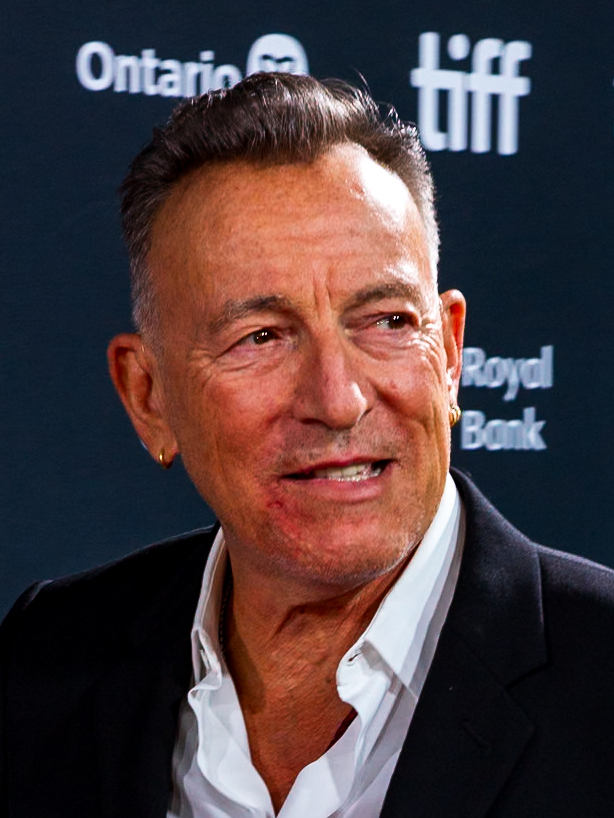
Source · CC BY-SA 4.0 · Crop by LeeGer · Displayed crop
The essentials
Forbes says Bruce Springsteen is a billionaire. Springsteen says he isn’t — “I’m not a billionaire. I wish I was, but they got that real wrong.” And the article that first crossed him over states plainly that his representatives could not confirm the estimate. Any profile that prints the number without the denial is telling you half the story.
Bruce Springsteen Net Worth: What the Sources Say
- $1.2 billion — Forbes, the only institution maintaining an estimate. It crossed him at $1.1 billion in July 2024 and raised it in 2025
- Disputed by the subject. October 2024, to a British newspaper: “I’m not a billionaire.” That is not modesty about a rounding error — it is a rejection of the classification
- Our take: $1.2 billion is the Forbes estimate, which we do not independently verify. His rejection of billionaire status belongs alongside it; we do not establish an alternative wealth range. See our methodology.
The reason the disagreement is possible: Forbes builds from two gross figures — a “$500 million lump sum” for the catalogue and “$380 million in revenue” from touring. Neither is money that reaches him. The rest of this page is about the gap.
The Catalogue Sale: A Price Nobody Confirmed
In late 2021 he sold both his recorded masters and his publishing to Sony, in two separate agreements covering more than 300 songs back to 1973. Sony confirmed the acquisition. Sony has never disclosed a price — not then, not since, not anywhere.
What the press produced instead were three different numbers from anonymous sources: Billboard’s “in the area of $500 million”, the New York Times’ $550 million from “two people briefed on the deal”, and Variety’s $500–600 million.
Variety also published the single most useful caveat anyone offered, from an insider familiar with such negotiations: “Everyone over-inflates.” With a worked precedent — a rock band’s catalogue reported at $150 million that turned out to be nearer $90 million.
And here is the part almost nobody uses. In the very same article that broke the story, Billboard published its own bottom-up valuation: catalogue revenue of about $15 million a year, masters worth $145–190 million at 15 to 20 times earnings, publishing worth $185–225 million at 25 to 30 times. Top of both ranges: $415 million. The reported price is therefore a 20 to 45 per cent premium over the buyer’s own analysis — the product of a bidding war after Sony lost the Dylan catalogue to Universal. The opening ask had been around $350 million.
What Sony’s Filings Actually Show
We searched the regulatory record, and it produced three findings.
First: the name Springsteen appears in zero Sony annual reports. Not one.
Second: Sony named and priced two other acquisitions in the same quarter — an anime streaming service at $1,234 million and a games studio at $3.6 billion — and did not mention this one at all. It was not individually material enough to disclose.
Third, and most useful: there is a number that constrains the price. Sony’s annual report shows music-catalogue additions of ¥87,350 million for the year containing the deal — roughly $778 million at Sony’s own stated exchange rate. That is every music catalogue Sony bought anywhere in the world, across both its recording and publishing arms, in twelve months.
A $550 million Springsteen deal would be about 71 per cent of Sony’s entire worldwide catalogue spend that year. That does not disprove the reported range — he plausibly was the overwhelming majority of it — but it is tight. And there is a specific reason it fits more comfortably than it looks: Sony did not fund the publishing half alone. A private investment firm co-financed that side, by an amount neither party disclosed, so the headline price and Sony’s balance sheet are not required to reconcile one for one.
Gross Is Not What He Kept
US tax law contains a provision written for exactly this situation: a songwriter may elect to treat the sale of compositions they created as a capital gain rather than ordinary income. The difference in 2021 was 23.8 per cent federal against 37 per cent. New Jersey then adds 10.75 per cent, with no preferential rate for gains.
Our arithmetic, clearly labelled as ours: on a $550 million gross with a negligible basis, tax of roughly $190 million leaves about $360 million — before management commission, legal and transaction fees, and any co-ownership interests. No source anywhere publishes a net-proceeds figure.
Three further points that break the gross-equals-wealth assumption:
- Not all of it may qualify. The election covers compositions the artist created. The master recordings are a different asset — and he acquired ownership of his earlier masters from his label as a re-signing incentive rather than creating them
- He gave up an annuity for a lump sum. Roughly $15 million a year, and rising in the streaming era
- The tax-timing story is inference, not fact. Every account frames the sale as shrewdly timed ahead of a proposed capital-gains increase. No filing and no on-record statement establishes that the timing was tax-motivated. We report it as a widely-drawn inference from the calendar
Touring, and the Scandal Built on the Wrong Number
His 2023–25 tour grossed $729.7 million from 4.9 million tickets across 129 shows — with 65 per cent of it earned in Europe. His career touring total is about $2.3 billion from 22.6 million tickets, one of only four artists above $2 billion.
One honest limit on that career figure: it covers reported dates only, essentially from 1985 onward. The entire Born to Run and Darkness-era touring economy is missing — for scale, three reported 1976 shows sold 3,000 to 6,000 seats at $6 a ticket.
Now the 2022 ticket-pricing controversy, which produced the most-quoted number of his career and one that turned out to be wrong about the tour.
After five days of backlash, the ticketing company disclosed that the average price of all tickets sold was $262, with dynamically-priced seats making up 11.2 per cent of sales and some reaching $4,000–5,000. His manager said the true average was “in the mid-$200 range”.
But that $262 was computed from the first three days of the hottest American on-sales only. The realised average across the actual 129-show, 4.9-million-ticket run was $149.30. The figure that caused the outrage was 76 per cent higher than what the tour actually charged — because most of it was European stadium dates at materially lower prices.
And a gross is not his income in any case: promoter share, venue rent, production, the band and crew, commissions, and tax in every jurisdiction played all come first. No figure for his personal take from any tour has ever been published.
Why 71 Million Albums Is Not 71 Million Albums
He has 71 million certified US album units, ranking thirteenth all-time. Three things distort that number, and they are worth knowing.
Certification counts shipments, not sales — including club sales, mail order and free goods. Streams convert, at 1,500 on-demand streams to one album. And multi-disc sets count each disc: his second-largest line item is a three-CD live box at 13 million units, which distorts roughly 18 per cent of the headline all by itself.
Then the dates. On 25 May 2022, seventeen certifications were filed in a single day — four album upgrades plus thirteen singles, eight of them certified for the first time 35 to 47 years after release. That one administrative act added 5.5 million units and moved his total from 65.5 million to 71 million: eight per cent of the headline created on one day, five months after the Sony sale closed.
The clearest illustration is Born to Run: gold in October 1975, then nothing for eleven years, then platinum and three-times platinum on the same day in 1986. The record had passed a million long before. His label simply had not filed. Certification dates are filing dates.
Claims We Checked and Rejected
- “Forbes ranked him the highest-paid musician of 2021 at $590 million.” Wrong twice over. Forbes put him second, at $435 million. The $590 million and the first place are Rolling Stone’s. The conflation is near-universal, and it happened because the same compiler moved between the two publications — they use different catalogue-sale assumptions and must never be blended
- “He was paid $20 million for the Netflix special.” Traces to a single Forbes contributor, stated with no attribution. We read both trade announcements in full; neither contains any dollar figure
- “He was paid roughly $22 million for the Jeep advertisement.” That is the airtime cost — about $5.5 million per thirty seconds — not talent. No fee was ever reported by anyone. The drink-driving charge that caused the advert to be pulled was dismissed; his reading was a quarter of the legal limit and he was fined $540
- Any gross for the 2021 Broadway return. The Broadway League declined to report it. Every circulating figure is an estimate
- “Net worth $81 million.” One aggregator headlined this — it is Forbes’ 2014 annual earnings misread as net worth. Indicative of the tier
Two smaller corrections. His 2009 Super Bowl performance paid nothing — league policy. And a New Jersey farmhouse frequently listed among his properties was only ever rented, at around $700 a month in the 1970s. It was never his.
Correction, September 7, 2026: The prominent figure is now explicitly attributed to Forbes and marked as disputed. Removed our unsupported $1.0–1.3 billion range from the article and FAQ. Forbes’ current profile still displayed $1.2 billion when checked on this date.
Financial record
The money timeline
The 2023-25 tour closes at $729.7 millionTour$729.7MDetails & source
Amount and context
$729,700,000 · USD
4.9 million tickets across 129 shows, averaging $149.30 – and 65 per cent of the gross came from Europe. His career Boxscore total stands at about $2.3 billion from 22.6 million tickets, one of only four artists above $2 billion. Note that the career figure covers reported dates only, essentially from 1985 onward: the entire Born to Run and Darkness-era touring economy is missing from it.
Open source for The 2023-25 tour closes at $729.7 million ↗Forbes calls him a billionaire – and cannot get it confirmedWealth estimates$1.1BDetails & source
Amount and context
$1,100,000,000 · USD
The article states plainly that representatives for Springsteen could not confirm the estimate. Three months later he rejected it himself: I'm not a billionaire, I wish I was, but they got that real wrong. Forbes raised the figure to $1.2 billion in 2025 and still carries it.
Open source for Forbes calls him a billionaire – and cannot get it confirmed ↗Seventeen certifications filed in a single dayContext — no disclosed paymentNot disclosedDetails & source
Amount and context
Not disclosed · USD
Four albums upgraded plus thirteen singles, eight of which received their first-ever certification 35 to 47 years after release. It added 5.5 million units and took his album total from 65.5 million to 71 million – about eight per cent of the headline number created in one administrative filing, five months after the Sony sale closed. Certification dates are filing dates, not sales dates.
Open source for Seventeen certifications filed in a single day ↗Sony's filings put a ceiling on the price – $778 million for everythingCatalog sale$778MDetails & source
Amount and context
$778,000,000 · USD
Sony's annual report shows music-catalogue additions of 87,350 million yen for the year containing this deal – roughly $778 million at the company's own stated exchange rate, covering every catalogue it bought anywhere in the world. A $550 million Springsteen deal would be about 71 per cent of that. Two further findings: the name Springsteen appears in zero Sony annual reports, and Sony individually named and priced two other acquisitions in the very same quarter. It also did not fund the publishing half alone – Eldridge Industries co-financed it, by an amount never disclosed.
Open source for Sony's filings put a ceiling on the price – $778 million for everything ↗Forbes ranks him second-highest-paid entertainer at $435 millionAnnual or season income$435MDetails & source
Amount and context
$435,000,000 · USD
For 2021, behind Peter Jackson. Do not confuse this with the figure of $590 million that also circulates for the same year – that is Rolling Stone's, which ranked him first. The two are constantly blended, and the reason is that the same compiler moved from one publication to the other. They use different catalogue-sale assumptions and cannot be mixed.
Open source for Forbes ranks him second-highest-paid entertainer at $435 million ↗The buyer's own valuation topped out at $415 millionCatalog sale$415MDetails & source
Amount and context
$415,000,000 · USD
In the same article that broke the deal, Billboard published a bottom-up valuation: catalogue revenue of about $15 million a year, masters worth $145-190 million at 15 to 20 times, publishing $185-225 million at 25 to 30 times. Top of both ranges is $415 million – so the reported price represents a 20 to 45 per cent premium, driven by a bidding war after Sony lost the Dylan catalogue to Universal. The opening ask had been about $350 million.
Open source for The buyer's own valuation topped out at $415 million ↗Sells masters and publishing to Sony – price never confirmedCatalog saleNot disclosedDetails & source
Amount and context
Not disclosed · USD
Two separate agreements covering both the recordings and the publishing, more than 300 songs back to 1973. Three outlets give three prices from anonymous sources: $500 million, $550 million, and $500-600 million. Sony has never disclosed a figure in any venue. One insider quoted by Variety put it plainly: everyone over-inflates – and cited a precedent where a reported $150 million catalogue turned out to be nearer $90 million.
Open source for Sells masters and publishing to Sony – price never confirmed ↗Springsteen on Broadway closes at $113 millionTour$113.06MDetails & source
Amount and context
$113,058,952 · USD
236 performances and 223,585 seats at the Walter Kerr, the highest-grossing solo show in Broadway history, averaging $505.66 a ticket. The economics were unusually favourable – no band, no supporting cast, minimal crew, and the theatre owner waived rent for at least eight weeks – but his own share was never published. The 2021 return is not included here: the Broadway League declined to report grosses for it, so every figure in circulation for that run is an estimate.
Open source for Springsteen on Broadway closes at $113 million ↗Amounts describe different financial measures and retain their original currencies. They must not be added together as personal wealth. Our methodology.
Common questions
Questions, answered
What is Bruce Springsteen's net worth in 2026?
Forbes estimates $1.2 billion, and it is the only institution maintaining a figure – but two caveats belong with it. The article that first crossed him into billionaire status in July 2024 states plainly that his representatives could not confirm the estimate. And in October 2024 he rejected it himself: ‘I’m not a billionaire. I wish I was, but they got that real wrong.’ That is not modesty about a rounding error but a rejection of the classification. We do not independently establish a wealth range. The disagreement is possible because Forbes builds from two gross figures – a $500 million catalogue sale and $380 million of touring revenue – neither of which is money that reaches him.
How much did Bruce Springsteen sell his catalogue for?
Nobody outside the deal knows, because Sony has never disclosed a price – not in 2021, not since, not anywhere. Three outlets published three different anonymously sourced numbers: ‘in the area of $500 million’, $550 million from two people briefed on the deal, and a range of $500 to $600 million. One insider told Variety simply that everyone over-inflates, citing a precedent where a catalogue reported at $150 million turned out to be nearer $90 million. Most usefully, in the same article that broke the story Billboard published its own bottom-up valuation topping out at $415 million – so the reported price is a 20 to 45 per cent premium, the product of a bidding war after Sony lost the Dylan catalogue. He sold both his master recordings and his publishing, in two separate agreements.
What do Sony's filings say about the Springsteen deal?
Three things. The name Springsteen appears in zero Sony annual reports. Sony named and priced two other acquisitions in the very same quarter – an anime streaming service at $1,234 million and a games studio at $3.6 billion – and did not mention this one at all, so it was not individually material. And there is a number that constrains the price: Sony’s music-catalogue additions for the year containing the deal were 87,350 million yen, roughly $778 million at Sony’s own stated rate, covering every catalogue it bought anywhere in the world. A $550 million Springsteen deal would be about 71 per cent of that. It fits more comfortably than it looks because Sony did not fund the publishing half alone – a private investment firm co-financed it, by an amount never disclosed.
How much did Springsteen actually keep from the catalogue sale?
No source anywhere publishes a net figure. US tax law lets a songwriter elect to treat the sale of compositions they created as a capital gain rather than ordinary income – 23.8 per cent federal against 37 per cent in 2021 – and New Jersey then adds 10.75 per cent with no preferential rate for gains. On a $550 million gross with a negligible basis, that arithmetic leaves roughly $360 million before management commission, legal and transaction fees. Three further points: not all of it may qualify, because the election covers compositions he created while he acquired his earlier master recordings from his label as a re-signing incentive; he gave up an annuity of about $15 million a year for a lump sum; and while every account frames the timing as shrewd, ahead of a proposed capital-gains increase, no filing or on-record statement establishes that it was tax-motivated.
How much did the Springsteen tour gross, and were tickets really $262?
The 2023 to 2025 tour grossed $729.7 million from 4.9 million tickets across 129 shows, with 65 per cent of it earned in Europe. His career touring total is about $2.3 billion from 22.6 million tickets, though that covers reported dates only, essentially from 1985 onward – the entire Born to Run and Darkness-era touring economy is missing from it. On the $262: that figure came from the ticketing company after the 2022 dynamic-pricing backlash, but it was computed from the first three days of the hottest American on-sales only. The realised average across the actual run was $149.30 – so the number that caused the outrage was 76 per cent higher than what the tour actually charged, because most of it was European stadium dates at lower prices.
Has Bruce Springsteen sold 71 million albums?
He has 71 million certified US album units, ranking thirteenth all-time – which is not the same thing. Certification counts shipments rather than sales, including club sales and free goods; streams convert at 1,500 to one album; and multi-disc sets count each disc, so his three-CD live box at 13 million units distorts roughly 18 per cent of the headline by itself. The dates matter too. On 25 May 2022 seventeen certifications were filed in a single day, eight of them for singles released 35 to 47 years earlier, adding 5.5 million units and moving his total from 65.5 million to 71 million – eight per cent of the headline created in one administrative act. Born to Run went gold in 1975, then took platinum and three-times platinum on the same day in 1986; the record had passed a million long before, but the label had not filed.
Follow the evidenceSources & reading10 links
- Forbes ↗
- Billboard — the deal, and its own $415 million valuation ↗
- Variety's $500–600 million ↗
- Sony's annual report — ¥87,350 million of catalogue additions, and no mention of Springsteen ↗
- Billboard Boxscore — $729.7 million and a $149.30 average ticket ↗
- Variety — the $262 figure behind the pricing controversy ↗
- On 25 May 2022, seventeen certifications were filed in a single day ↗
- Forbes put him second, at $435 million ↗
- "I'm not a billionaire" — his own words ↗
- The Broadway record: $113,058,952 across 236 performances ↗